Table of Contents
- How Portland’s Market Moves Through the Seasons
- Spring in Portland: When the Market Explodes (and What It Means for Your Sale)
- Summer Sales: Capturing Portland’s Highest Prices (If You Know the Strategy)
- Fall in Portland: Less Competition, More Serious Buyers (The Contrarian Advantage)
- Selling in Portland’s Winter: Why the “Worst” Season Might Be Your Best Strategy
- When Market Forces Matter More Than the Season (What Every Portland Seller Must Monitor)
- Does Seasonality Apply to ALL Portland Properties?
- Key Takeaways
Selling a home is one of the biggest financial decisions you’ll make, and in Portland’s unique real estate market, timing can significantly impact your bottom line. While you’ve probably heard that “spring is the best time to sell,” what does the data actually say for the Portland metro area? And more importantly, what if your timeline doesn’t align with the traditional peak season? The Portland real estate market follows distinct seasonal patterns influenced by our climate, school schedules, and the region’s robust employment sectors—from the “Silicon Forest” tech giants to Nike’s global headquarters. Understanding these rhythms can mean the difference between a quick, profitable sale and a prolonged listing that requires multiple price reductions. Nationally, homes listed in the first two weeks of June sell for an average of 2.3% more than those listed at other times, but Portland’s market has its own personality. Our famous rain, urban growth boundaries, and highly educated buyer pool create dynamics that don’t always mirror national trends. This guide synthesizes three years of Regional Multiple Listing Service (RMLS) data, national real estate research, and local economic indicators to give you a clear, strategic roadmap. Whether you’re prioritizing maximum profit, minimal stress, or working with a non-negotiable timeline, you’ll discover which season aligns best with your goals—and how to leverage Portland’s unique market characteristics to your advantage.
How Portland’s Market Moves Through the Seasons
Before diving into specific strategies, let’s establish the baseline patterns that drive Portland’s real estate market throughout the year, and how they compare to national trends. The U.S. real estate market follows a predictable annual cycle driven by weather, school schedules, and cultural norms. Nationally, nearly 20% of all home sales occur in May and June alone. ATTOM Data Solutions found that sellers in May realized an average 12.8% premium above historical market value. This national pattern provides a valuable baseline, but Portland’s market adds several distinctive layers. Our market is shaped by weather patterns that create ideal conditions during mild springs and dry summers, while notoriously wet fall and winter months naturally dampen buyer enthusiasm. Top-rated school districts in Beaverton, Lake Oswego, and Portland Public Schools drive family buyers to target spring and early summer moves to settle before the new academic year. Major employers like Intel, Nike, and the thriving tech startup ecosystem create corporate relocation patterns that influence buyer pools year-round. Perhaps most significantly, Oregon’s strict Urban Growth Boundaries limit sprawl and contribute to persistent inventory shortages, keeping the market more competitive throughout the year than many comparable metros.
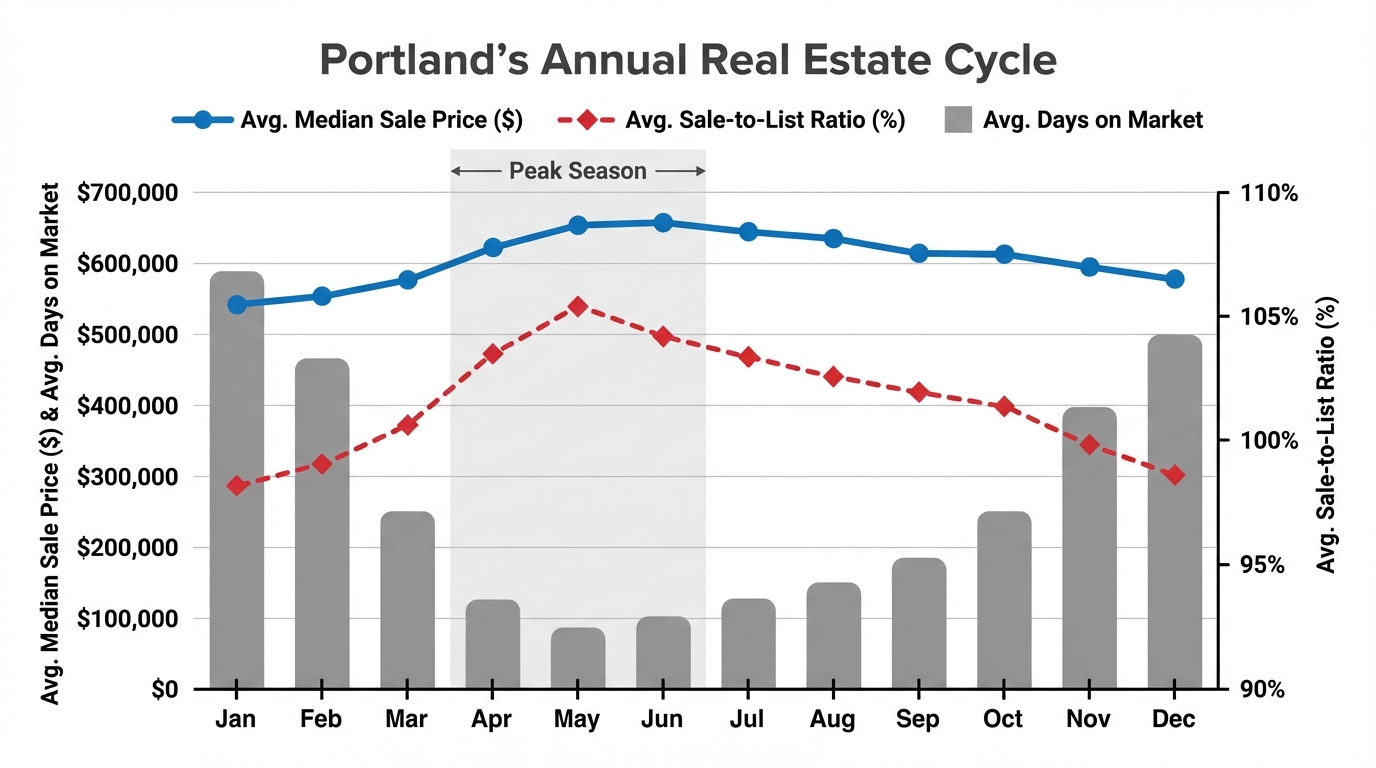
Portland’s market can be divided into four distinct periods:
- Spring (March-May) represents the explosive peak, when buyer activity surges and competition intensifies.
- Summer (June-August) maintains strong momentum with the year’s highest prices.
- Fall (September-November) offers a strategic balance with fewer competing sellers but more serious buyers.
- Winter (December-February) features the lowest competition but also the smallest buyer pool, creating unique opportunities for motivated sellers.
Analyzing 2021-2023 RMLS data reveals consistent patterns: median sale prices peak in May-June, Days on Market hit their lowest point in April-May (averaging just 17-19 days), and sale-to-list ratios exceed 102% during the spring peak, indicating multiple-offer scenarios and bidding wars.
Spring in Portland: When the Market Explodes (and What It Means for Your Sale)
Spring is statistically the most advantageous time to sell in Portland, but it requires strategic preparation to stand out in a suddenly crowded marketplace. RMLS data consistently shows pending sales jump 20-30% from February to March. During peak spring months (April-May), the average sale-to-list ratio reaches 101.9%-102.8%, meaning homes routinely sell above asking price. Days on Market plummet to just 17-19 days for appropriately priced homes—a dramatic reduction that underscores the season’s competitive intensity.
Why Spring Works So Well in Portland
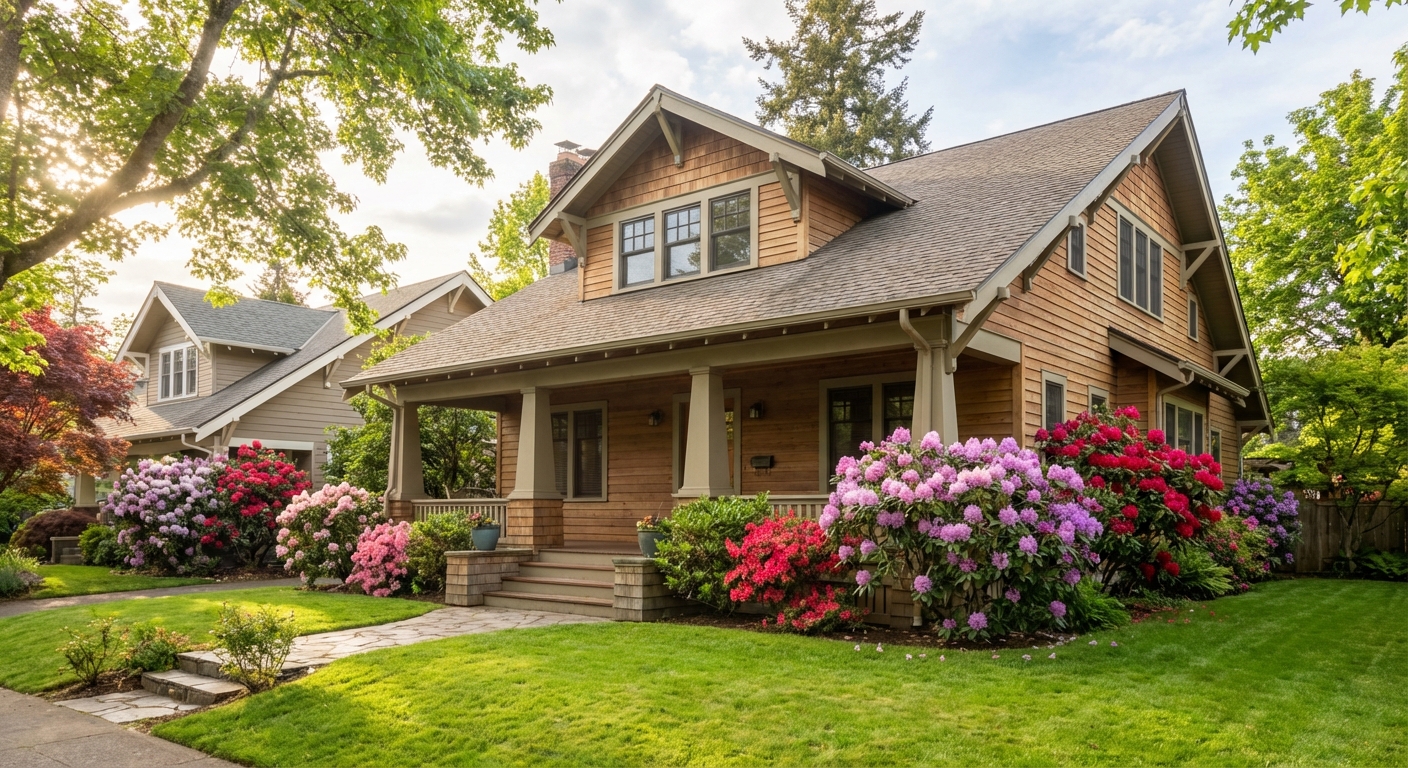
Why does spring work so well in Portland specifically? The timing perfectly aligns with families needing to close before the next school year, allowing children to transition smoothly to new schools. Portland’s spring weather—blooming rhododendrons, clear skies, comfortable temperatures—creates ideal conditions for showcasing curb appeal. Tax refund season provides buyer liquidity just as inventory increases, and post-winter “cabin fever” drives pent-up demand from buyers who’ve been waiting for better conditions.
Who’s Buying in Spring?
Spring attracts the broadest, most competitive buyer pool:
- Families with school-aged children dominate the market, searching urgently for homes in desirable districts
- First-time homebuyers who saved through winter are ready to act decisively
- Move-up buyers selling their own homes in the same hot market create a chain reaction of transactions
- Relocating professionals starting jobs with major Portland employers add to the demand
Strategic Spring Preparation
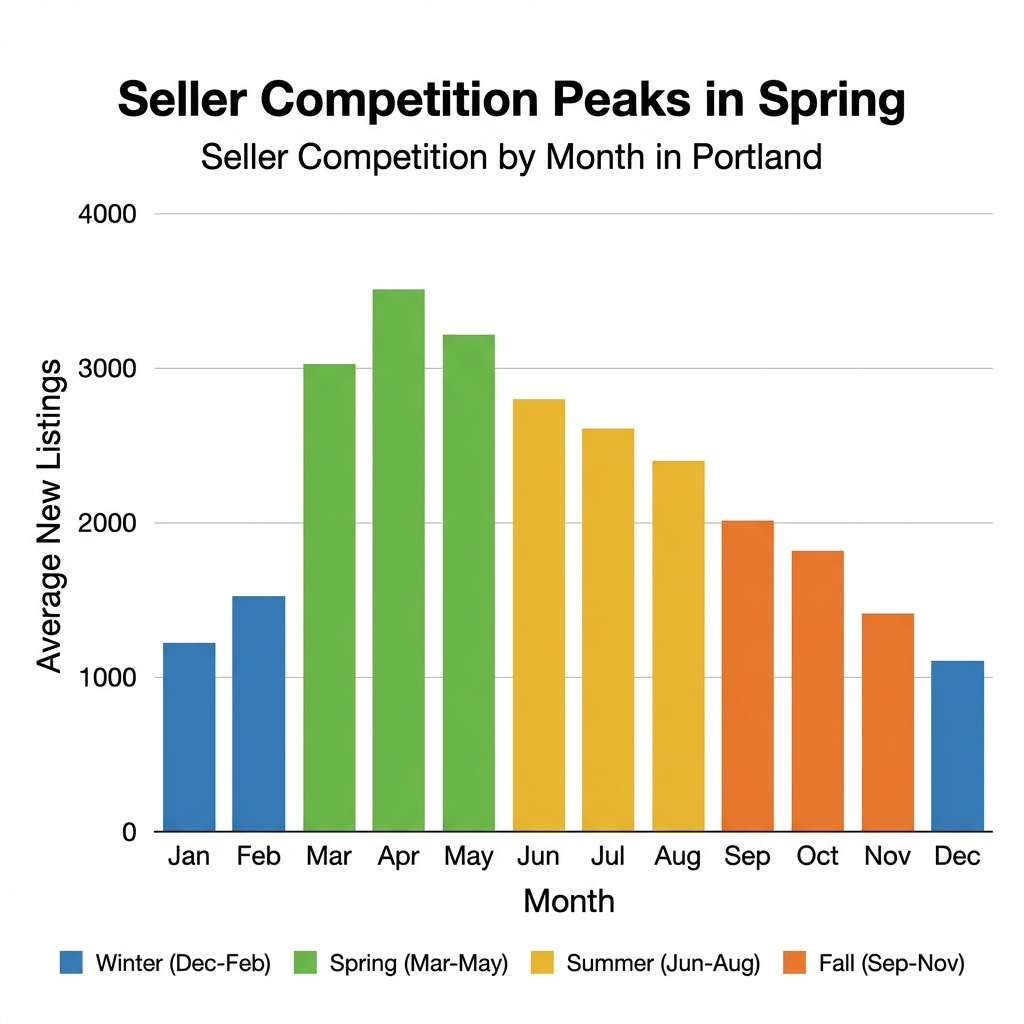
Strategic preparation becomes critical when competing against thousands of other listings. Launch your listing mid-week with first showings that weekend to consolidate interest and potentially generate multiple offers. With 3,300+ competing listings in April, standing out requires investment in professional staging and high-quality marketing materials that highlight your home’s best features. In a multiple-offer environment, slightly under-pricing can trigger bidding wars that push the final sale price well above list. Highlight Portland-specific assets like proximity to parks, bike paths, breweries, and neighborhood character—the lifestyle elements Portland buyers prioritize above square footage alone.
The primary challenge is simple: competition from other sellers peaks simultaneously. Your home needs to shine immediately or risk being overlooked as dozens of new listings hit the market weekly. Real-World Example: A family in Beaverton listed their 4-bedroom home in mid-April with fresh landscaping, interior painting, and professional staging. The result: over a dozen showings the first weekend, three competitive offers, and a final sale price 4% above asking, closing in 30 days. This outcome reflects what’s possible when timing and preparation align perfectly.
Summer Sales: Capturing Portland’s Highest Prices (If You Know the Strategy)
While spring generates the most frenzy, summer often produces the absolute highest sale prices and remains highly favorable for sellers who adapt their approach. Historical RMLS data shows the absolute highest median sale prices typically occur in June or July. The three-year average peaks at $583,300 in June. This reflects both strong continued demand and the closing of spring contracts written at peak pricing.
The Summer Market Dynamic
The market dynamic shifts slightly as summer progresses. June remains extremely strong as spring momentum carries forward, while inventory reaches its annual peak of 3,500+ listings, giving buyers more options but leaving sellers in a strong position. By August, slight “market fatigue” can emerge as some buyers take vacations or pause their search. Days on Market tick up modestly from spring’s 17-19 days to 22-26 days, though this remains quite favorable compared to fall and winter.
Who’s Buying in Summer?
Summer buyers in Portland include:
- Families on a deadline—this is their last chance before school starts
- Corporate relocations bring professionals moving to Portland for positions at Intel, Nike, Adidas, or tech startups, who often house-hunt in summer
- Out-of-state buyers frequently take advantage of Portland’s pleasant summer weather for multi-day house-hunting trips, making serious purchase decisions
Strategic Summer Considerations
Strategic considerations shift in summer. Showcase outdoor living by professionally photographing and staging decks, patios, gardens, and outdoor entertainment spaces—Portland summers are glorious, and buyers want to envision themselves enjoying them. Accommodate agent and buyer vacation schedules by offering evening and weekend showings when possible. Timing within summer matters significantly. June and early July maintain spring’s intensity, while late August listings risk being perceived as “stale” if they don’t sell quickly. With peak inventory, overpriced homes get overlooked as buyers have abundant alternatives to compare.
Portland’s Summer Advantage
Unlike many markets where brutal heat suppresses activity, Portland’s mild summer temperatures in the 70s-80s keep buyers actively touring homes. Our legendary dry summers mean consistent showing conditions without rain delays.
However, watch external factors carefully. Mortgage rate fluctuations can impact summer activity significantly. The Federal Reserve’s monetary policy directly affects housing affordability, and rate increases can cool even peak-season demand.
Fall in Portland: Less Competition, More Serious Buyers (The Contrarian Advantage)
As Portland’s famous rain returns and leaves blanket the streets, the real estate market transitions into a more balanced phase—offering strategic advantages for the right seller.
The Market Rebalance
The market rebalances as both buyer and seller pools contract. Average monthly closed sales drop from 2,875 in June to 2,238 in September and 1,833 by November. But this isn’t necessarily disadvantageous—it creates a more rational, less frenzied environment where quality conversations can happen.
The Fall Buyer Profile
The fall buyer differs fundamentally from spring shoppers:
- “Looky-loos” disappear; fall buyers are highly motivated with clear timelines
- Corporate relocators starting new jobs with Portland’s major employers need to close quickly
- Empty-nesters who avoided spring and summer chaos now have space to make thoughtful decisions
- Buyers who were outbid in multiple-offer spring scenarios have refined their search and know exactly what they want
- First-time buyers who’ve saved additional down payment funds throughout the year are ready to compete
Strategic Fall Advantages
Strategic advantages emerge for fall sellers:
- Reduced competition: By November, new listings drop to just 1,933 monthly—nearly half the spring/summer peak
- Greater visibility: Your home faces far fewer competing properties, making it easier to capture buyer attention
- Serious negotiations: Replace bidding wars with more straightforward and less emotionally charged transactions
- Targeted marketing: More effective outreach to specific demographics with a smaller, more focused buyer pool
The Pricing Reality
The pricing reality shifts: sale-to-list ratios trend back toward 98-99%, reflecting a more balanced negotiating environment. Multiple offers become less common, requiring realistic pricing from day one. Overpriced homes languish as buyers have time to comparison-shop and evaluate alternatives carefully.
Portland-Specific Fall Challenges
- Curb appeal demands extra effort: Keep roofs and gutters clear of leaves, plant fall mums and pansies, and ensure walkways are well-lit during increasingly overcast days
- Interior lighting matters more: Shorter days and gray skies make professionally staging bright, inviting interiors critical
- Weather contingencies: Rain can complicate inspections, appraisals, and final walkthroughs
- Thanksgiving slowdown: Market activity nearly halts the week of the holiday
Days on Market reality: Expect 32-44 days on market versus spring’s 17-19 days. This is normal for the season and shouldn’t cause panic if your pricing is appropriate for current conditions.
Selling in Portland’s Winter: Why the “Worst” Season Might Be Your Best Strategy
Winter is statistically the slowest real estate season in Portland, but for sellers in unique situations or with non-negotiable timelines, it offers profound strategic advantages.
The Stark Reality
Winter represents the absolute market floor. January 2024 inventory hit just 2.4 months of supply, with only 1,440-2,056 new listings monthly. Days on Market stretch to 44-49 days. This is unequivocally the least active season in Portland’s real estate calendar.
The Counterintuitive Advantage
With rock-bottom inventory, any well-prepared, appropriately priced home becomes one of very few options. This creates a micro-seller’s market even within an overall slow season. Serious buyers have limited choices and must act decisively when they find a property that meets their needs.
The Winter Buyer Profile
The winter buyer profile differs dramatically from other seasons:
- Corporate relocations: Executives to Portland year-round—Intel, Nike, Columbia Sportswear, and tech companies relocate key personnel regardless of season
- Cash buyers and investors: Face less competition from traditional financed buyers, making winter attractive for seeking opportunities
- Highly motivated life-change buyers: Dealing with job changes, divorces, or estate settlements can’t wait for spring
- Persistent local buyers: Who’ve been searching for months and lost multiple spring bidding wars remain actively looking, often more determined than ever
Critical Winter Preparation
Strategic preparation becomes absolutely critical in winter:
- Professional photography is non-negotiable: Your listing must convey warmth and inviting comfort to overcome gray, wet exterior conditions
- Stage for emotional impact: Create cozy, inviting spaces with warm lighting, fireplaces featured prominently, and comfortable furnishings that help buyers envision winter evenings
- Virtual tours and 3D walkthroughs: Allow serious buyers to pre-qualify homes without braving bad weather for initial viewings
- Price perfectly from day one: The small buyer pool means you may only get one shot at the few active purchasers; overpricing guarantees failure
Holiday Timing Considerations
Holiday considerations affect timing decisions:
- List after Thanksgiving but before mid-December to capture relocators needing to close before year-end for tax purposes
- Alternatively, wait until early January when corporate relocators receive transfer notices for Q1 starts
- Be extremely flexible for showings around holiday schedules to accommodate the limited buyer pool
Real-World Example: An executive at a downtown Portland tech firm needed to sell their Pearl District condo in November. Listed just after Thanksgiving as one of only a handful of comparable units on the market, their property attracted immediate attention from another corporate transferee. While they received only one offer, it was strong and well-qualified, close to asking price, closing before year-end. This scenario illustrates winter’s unique advantage: low competition can offset low buyer volume when preparation and pricing align.
When Winter Makes Sense
Winter makes sense when you have a non-negotiable timeline due to job relocation or financial necessity, or when you own a truly unique property that appeals to niche buyers—luxury condos, architecturally significant homes, or multi-generational properties. In these scenarios, winter’s lack of competition can be powerfully advantageous.
When Market Forces Matter More Than the Season (What Every Portland Seller Must Monitor)
While seasonal patterns are consistent and predictable, external economic factors can amplify, diminish, or completely override the traditional calendar.
Mortgage Interest Rates: The Great Equalizer
Mortgage interest rates act as the great equalizer in real estate markets. The Federal Reserve’s monetary policy directly impacts affordability—a 1% rate increase can reduce buyer purchasing power by 10-15%. Rapid rate increases throughout 2022-2023 tempered Portland’s usual spring frenzy, leading to longer market times even during peak months. Conversely, a sudden rate drop can stimulate activity during traditionally slow periods like fall or winter, bringing hesitant buyers back to the market.
Portland’s Employment Engine
Portland’s employment engine drives buyer pools in significant ways. The health of the “Silicon Forest” directly influences buyer demand and qualification levels. Intel, Nike, Adidas, and tech startup hiring surges create waves of relocating buyers with strong finances and urgent timelines. Conversely, tech sector layoffs can cause buyers to delay decisions regardless of season. Monitor quarterly earnings reports and employment data from major regional employers to gauge likely buyer activity.
Inventory Levels and Urban Growth Boundaries
Inventory levels interact with Oregon’s unique land-use constraints. Oregon’s statewide Urban Growth Boundaries intentionally limit sprawl, creating structural housing scarcity that affects market dynamics year-round. When inventory drops extremely low (under 3 months of supply), even “slow” seasons remain competitive as buyers scramble for limited options. Portland State University’s Center for Real Estate provides quarterly housing analysis tracking these critical trends.
Post-Pandemic Market Shifts
Post-pandemic market shifts have altered traditional patterns in subtle but meaningful ways. Remote and hybrid work flexibility has partially decoupled some buyers from strict school-year timelines, allowing more flexibility in purchase timing. This has contributed to more robust fall and winter markets since 2020 compared to historical patterns. However, core seasonal patterns remain dominant—the shift is marginal, not transformative.
Local Policy and Development
Local policy and development create hyperlocal demand that can override seasonal trends. New transit lines, urban renewal projects, and zoning changes create concentrated demand in specific neighborhoods regardless of season. The Beaverton area, for example, has seen sustained demand driven by MAX expansion and tech sector growth that softens typical seasonal dips.
Strategic Takeaway
Monitor the Federal Reserve’s rate decisions through their public announcements, track Portland Business Journal coverage of major employer activity and hiring trends, and consult with local real estate professionals who have real-time market intelligence. Sometimes a “bad” season with favorable external factors beats a “good” season with economic headwinds.
Does Seasonality Apply to ALL Portland Properties? (Spoiler: Not Exactly)
While broad seasonal trends hold true across the Portland metro area, property type and location create important variations that sellers should understand when planning their listing strategy.
Single-Family Homes vs. Condominiums
Single-family homes versus condominiums follow different seasonal rhythms. Single-family homes in family-oriented suburbs like Beaverton, Lake Oswego, and West Linn show the most pronounced spring peak, driven by school-year timing. Urban condos in the Pearl District, South Waterfront, or downtown appeal to buyers less tied to school schedules—young professionals, students at Portland State University, and empty-nesters who prioritize lifestyle over district boundaries. Condo markets often see extended fall activity as these demographics make purchase decisions, and winter slowdowns may be less severe than for suburban family homes.
Luxury vs. Entry-Level Properties
Luxury versus entry-level properties operate on different timelines with distinct buyer pools:
| Property Type | Seasonal Sensitivity | Optimal Timing |
|---|---|---|
| Luxury Homes (>$1.5M) | Lower – Smaller, specific buyer pool not driven by seasonal urgency | Fall or winter when serious buyers focus without spring frenzy |
| Entry-Level (<$500K) | Higher – First-time buyers highly active in peak season | Spring (April-May) for maximum competition and pricing |
Geographic Micromarkets
Geographic micromarkets within Portland metro exhibit varying seasonal sensitivity:
- Close-in eastside neighborhoods like Hawthorne, Division, and Alberta with strong walkability and urban amenities appeal year-round to lifestyle buyers who prioritize neighborhood character over space
- Suburban markets in Beaverton, Tigard, and Oregon City show more traditional family-driven seasonality with pronounced spring peaks and winter lulls
- Outlying areas may experience even more pronounced seasonal variation due to weather impacts and longer commute considerations during dark winter months
Investment Properties
Investment properties follow their own calendar entirely. Multi-family properties, duplexes, and investment homes attract year-round investor interest based on cap rates and cash flow potential rather than lifestyle timing. Cash buyers and investors actively shop in winter when competition from traditional owner-occupant buyers is reduced, potentially creating better negotiating opportunities.
Strategic Implication
Consider your specific property type and location when timing your sale. A Pearl District condo might perform nearly as well in October as in May, while a 4-bedroom home in Beaverton follows the traditional spring peak much more closely. Understanding these nuances helps align your listing strategy with your property’s specific buyer pool.
Key Takeaways
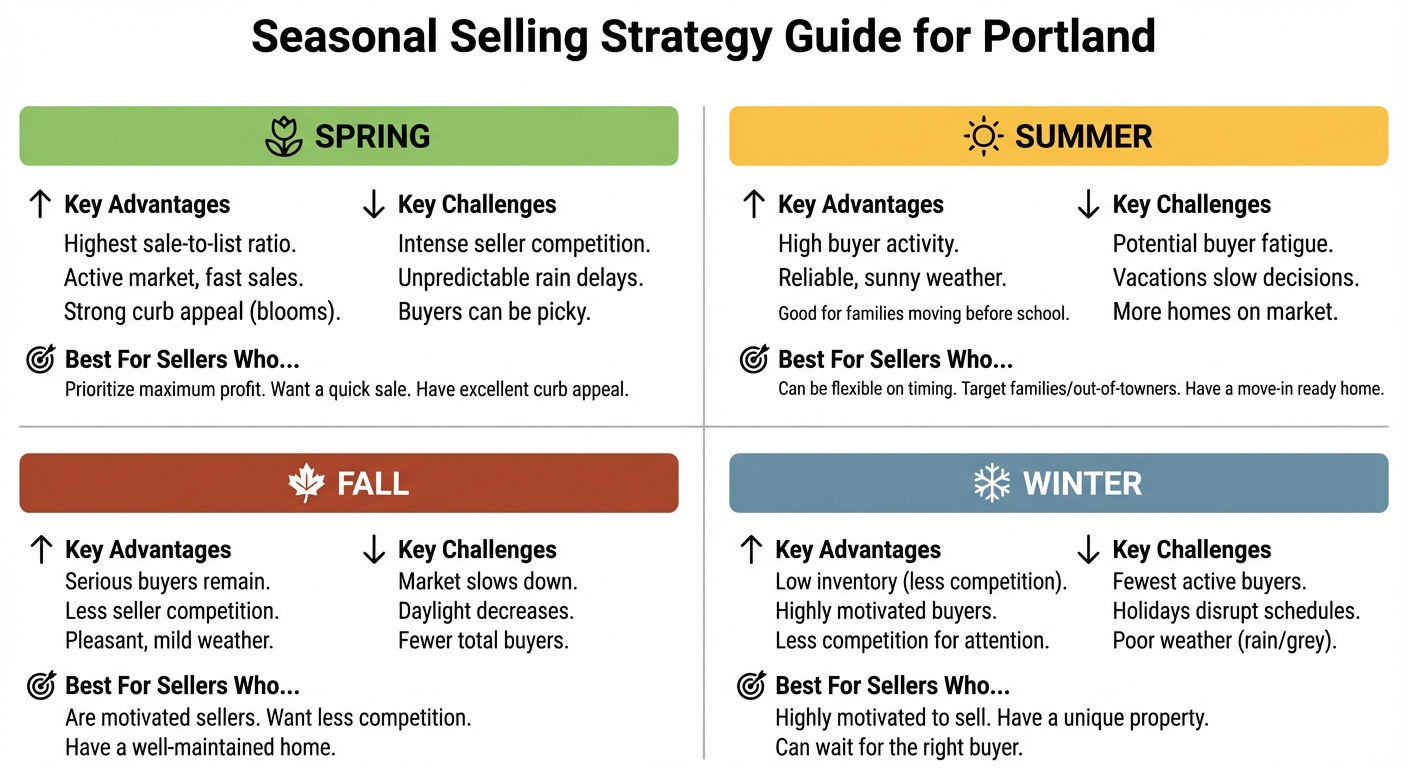
The data is clear: for the majority of Portland metro homeowners, late April through June offers the statistically optimal window to sell, combining the highest sale-to-list price ratios (102%+), fastest market times (17-19 days), and largest buyer pools. But the “best” time isn’t just about statistics—it’s about aligning market conditions with your personal circumstances and priorities:
| Your Priority | Best Season | Why It Works |
|---|---|---|
| Maximum profit + speed | Mid-April through late May | Peak market frenzy and multiple-offer scenarios that drive prices above asking |
| Strong pricing, less chaos | Early summer (June-July) | Peak median prices with marginally less competition and robust buyer pool |
| Rational, less stressful process | Fall (September-October) | Serious buyers with clear timelines and significantly reduced seller competition |
| Non-negotiable timeline or unique property | Winter (December-February) | Extreme lack of inventory works powerfully when you’re one of few available options |
Remember that external factors—particularly mortgage rates, local employment trends, and inventory levels—can modify or even override seasonal patterns. The Portland market’s structural housing shortage created by Urban Growth Boundaries means our market stays more competitive year-round than many comparable metros, softening seasonal extremes. Ultimately, success in any season depends on three things: strategic preparation that makes your home stand out, realistic pricing that reflects current market conditions, and expert local guidance from professionals who understand Portland’s unique dynamics. Whether you sell in the spring rush or the winter lull, understanding these seasonal dynamics empowers you to make the timing decision that best serves your financial and personal goals. Portland’s market rewards sellers who combine data-driven strategy with property-specific preparation.
Ready to Develop Your Personalized Selling Strategy?
Whether you’re targeting peak spring pricing or a strategic winter sale, timing is just one piece of the puzzle. Let’s analyze your specific property, timeline, and market position to determine your optimal listing window.
Let’s turn Portland’s seasonal patterns into your strategic advantage.
References
- ATTOM Data Solutions. (2023). Best Days to Sell a Home. https://www.attomdata.com/news/market-trends/home-sales-prices/attom-analyzes-best-days-of-the-year-to-sell-a-home/
- Federal Reserve Bank of St. Louis. (2024). 30-Year Fixed Rate Mortgage Average in the United States (MORTGAGE30US). https://fred.stlouisfed.org/series/MORTGAGE30US
- National Association of REALTORS®. (2023). 2023 Profile of Home Buyers and Sellers. https://www.nar.realtor/research-and-statistics/research-reports/highlights-from-the-profile-of-home-buyers-and-sellers
- Oregon Office of Economic Analysis. (2023). Oregon Housing Needs Analysis. https://www.oregon.gov/lcd/UP/Pages/Housing-Needs.aspx
- Portland Business Journal. (2024). Largest Employers in the Portland Metropolitan Area. https://www.bizjournals.com/portland/
- Portland State University, Center for Real Estate. (2023). State of the Portland Housing Market Report. https://www.pdx.edu/real-estate/research-publications
- Redfin Data Center. Portland, OR Housing Market Trends. https://www.redfin.com/city/15239/OR/Portland/housing-market
- Regional Multiple Listing Service (RMLS™). (2024). Market Action Statistics. https://www.rmlsweb.com/v2/public/statistics.asp
- Zillow Research. (2023). Now Is the Best Time of Year to List a Home for Sale. https://www.zillow.com/research/best-time-to-list-2023-32468/