Table of Contents
- The Historic Significance That Sets Oregon City Apart
- How a $50+ Million Riverwalk Project is Transforming Oregon City’s Future
- From Vision to Reality: How Oregon City is Successfully Executing Urban Renewal
- Why Oregon City Offers the Best Real Estate Value in the Portland Metro Area
- The Lifestyle Advantages That Make Oregon City Home
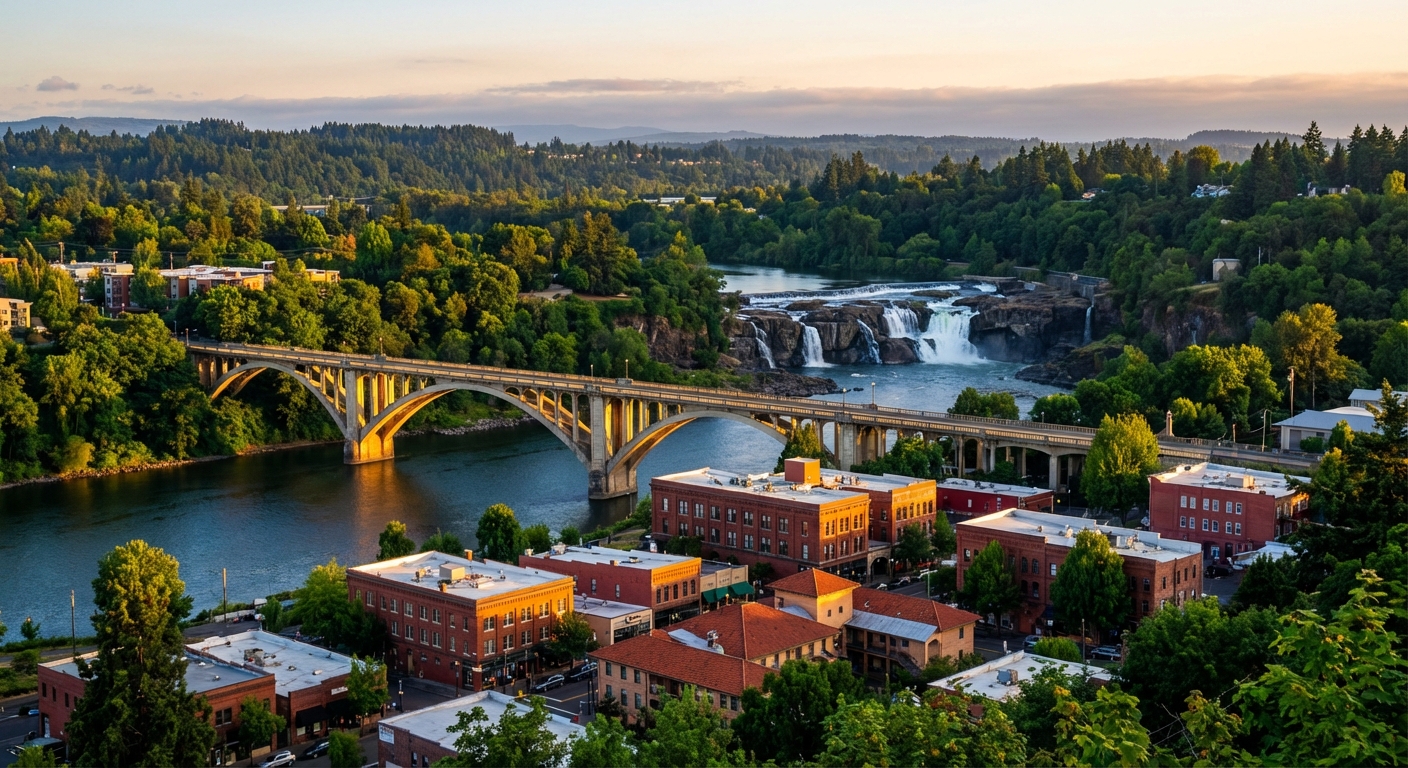
Oregon City stands at a fascinating crossroads—literally and figuratively. As the first incorporated city west of the Rocky Mountains and the historic end of the Oregon Trail, this community has deep roots in American history. But what’s drawing today’s homebuyers isn’t just nostalgia—it’s a powerful combination of preserved character and forward-thinking development that’s reshaping the city into one of the Portland metro area’s most compelling real estate opportunities.
While neighboring Portland grapples with market volatility and Lake Oswego commands premium prices, Oregon City offers something increasingly rare: authentic historic charm paired with ambitious urban renewal projects, all at a more accessible price point. The city’s median home price of $612,500 represents not just current value, but significant future potential, especially as transformative projects like the $50+ million Willamette Falls Legacy Project come to fruition.
This isn’t a story about a city trading its soul for development—it’s about a community that’s found a way to honor its pioneering past while building a vibrant future. For homebuyers seeking both character and investment potential, Oregon City presents a unique value proposition worth serious consideration.
The Historic Significance That Sets Oregon City Apart
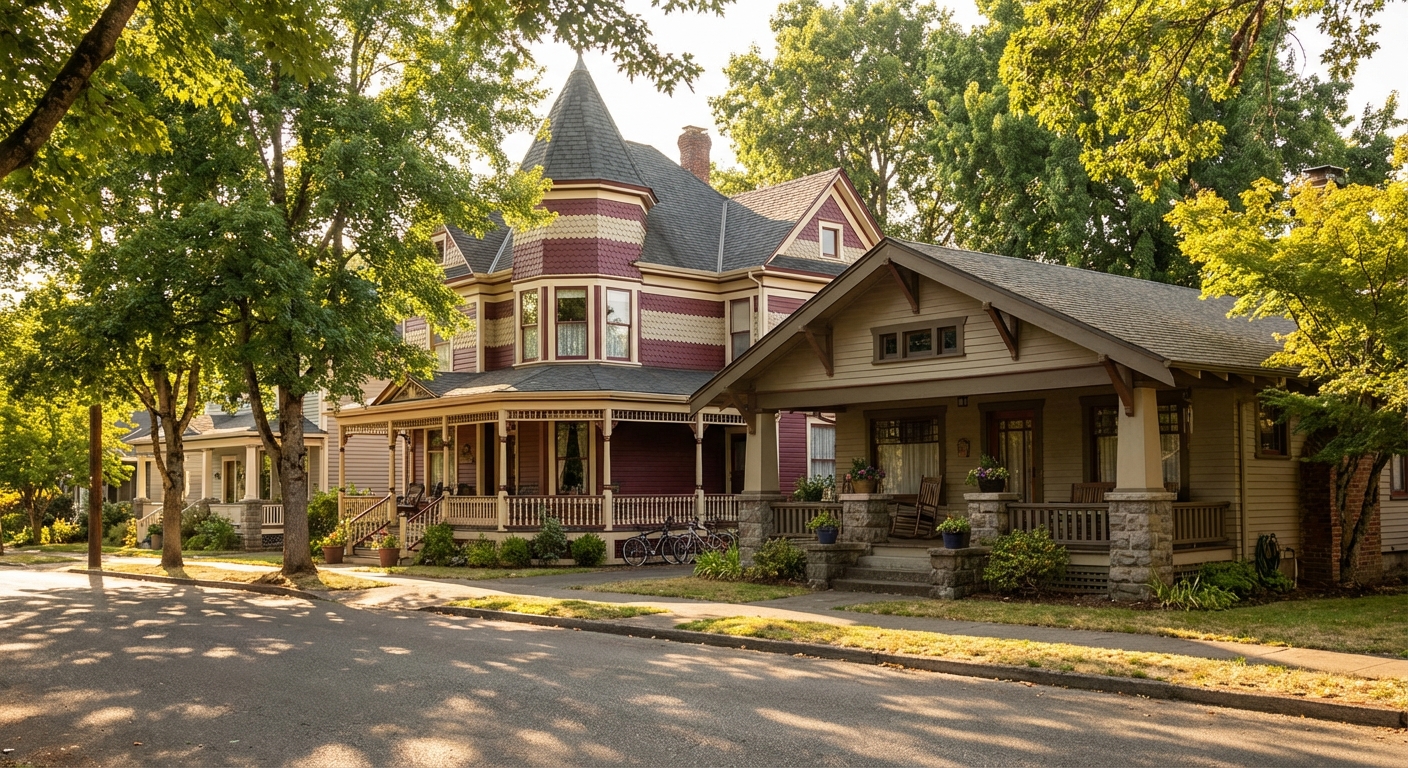
Oregon City’s historical importance isn’t just a marketing angle—it’s a fundamental aspect of the community’s identity that influences everything from urban planning to property values.
Oregon City served as the first capital of the Oregon Territory and hosted the first federal court west of the Rockies, establishing it as a place of genuine historical gravity. The city’s location at the terminus of the Oregon Trail cemented its role as the final destination for hundreds of thousands of pioneers, a legacy preserved and celebrated at the End of the Oregon Trail Interpretive Center.
This historical significance is officially recognized through multiple National Register Historic Districts, including Canemah and the Oregon City Historic District, with over 100 contributing properties that preserve 19th and early 20th-century architecture. According to the Oregon Parks and Recreation Department, historic preservation efforts correlate with increased property values, enhanced tourism, and stronger community identity—tangible benefits that extend beyond aesthetic appeal.
The Oregon City Historic Review Board actively oversees development within historic districts, ensuring new construction and renovations remain compatible with the area’s architectural character as outlined in municipal code. Architectural styles including Carpenter Gothic, Queen Anne, and Craftsman dominate the landscape, particularly in the McLoughlin Conservation District, creating a cohesive visual identity that distinguishes Oregon City from cookie-cutter suburban developments.
Key Insight: Research consistently shows that historic districts often outperform other areas in property value appreciation, particularly during market downturns, because their unique character provides stable, desirable living environments. For homebuyers, this means investing in a property within Oregon City’s historic neighborhoods isn’t just about owning a beautiful home—it’s about securing a piece of protected heritage that maintains its value over time.
The End of the Oregon Trail Interpretive Center serves as both a tourist attraction and a daily reminder of the city’s role as the final destination for hundreds of thousands of pioneers. This connection to American history creates a sense of place that simply cannot be replicated in newer developments, making Oregon City homes particularly attractive to buyers seeking authenticity and character.
How a $50+ Million Riverwalk Project is Transforming Oregon City’s Future
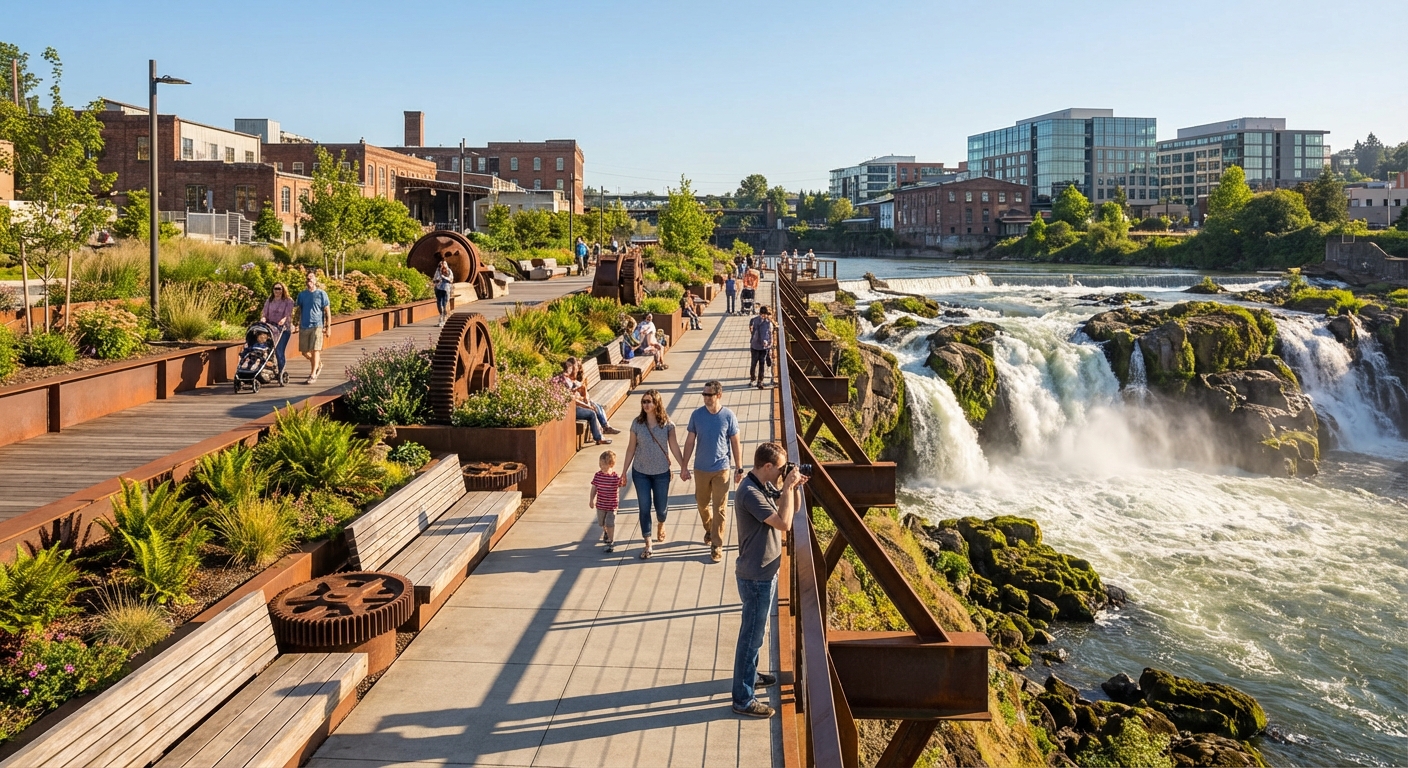
The Willamette Falls Legacy Project represents the most significant urban renewal effort in Oregon City’s modern history, poised to unlock unprecedented public access to natural beauty while driving substantial economic growth.
This multi-partner initiative aims to reclaim 22 acres of former industrial land around the nation’s second-largest waterfall by volume, providing public access to Willamette Falls for the first time in over a century. The project’s first phase public riverwalk will guide visitors through the site’s geology, history, and ecology, with construction anticipated following final design completion and fundraising.
An early economic impact analysis projects significant job creation, increased tourism, and substantial rises in local property values once the project reaches completion. The study suggests that completed riverfront projects of this scale typically generate property value increases of 15-25% within a half-mile radius over five to seven years—a powerful indicator of the investment potential for current and prospective homeowners.
This transformation represents a powerful catalyst for growth, converting a post-industrial brownfield into a world-class public amenity that will fundamentally redefine Oregon City’s waterfront identity. For homebuyers, the Legacy Project signals long-term appreciation potential—properties within proximity to major public amenities consistently see above-average value growth.
The project demonstrates Oregon City’s ability to leverage public-private partnerships to achieve ambitious development goals while maintaining environmental and historical sensitivity. Rather than simply building generic commercial spaces, the city has committed to creating a destination that honors both the natural power of the falls and the industrial heritage that shaped the community.
The riverwalk will connect to Oregon City’s existing trail system, creating a comprehensive recreational network that enhances quality of life and property desirability. Imagine purchasing a home where you can walk or bike to one of the most spectacular natural features in the Pacific Northwest—that’s the reality the Willamette Falls Legacy Project is creating for Oregon City residents.
From Vision to Reality: How Oregon City is Successfully Executing Urban Renewal
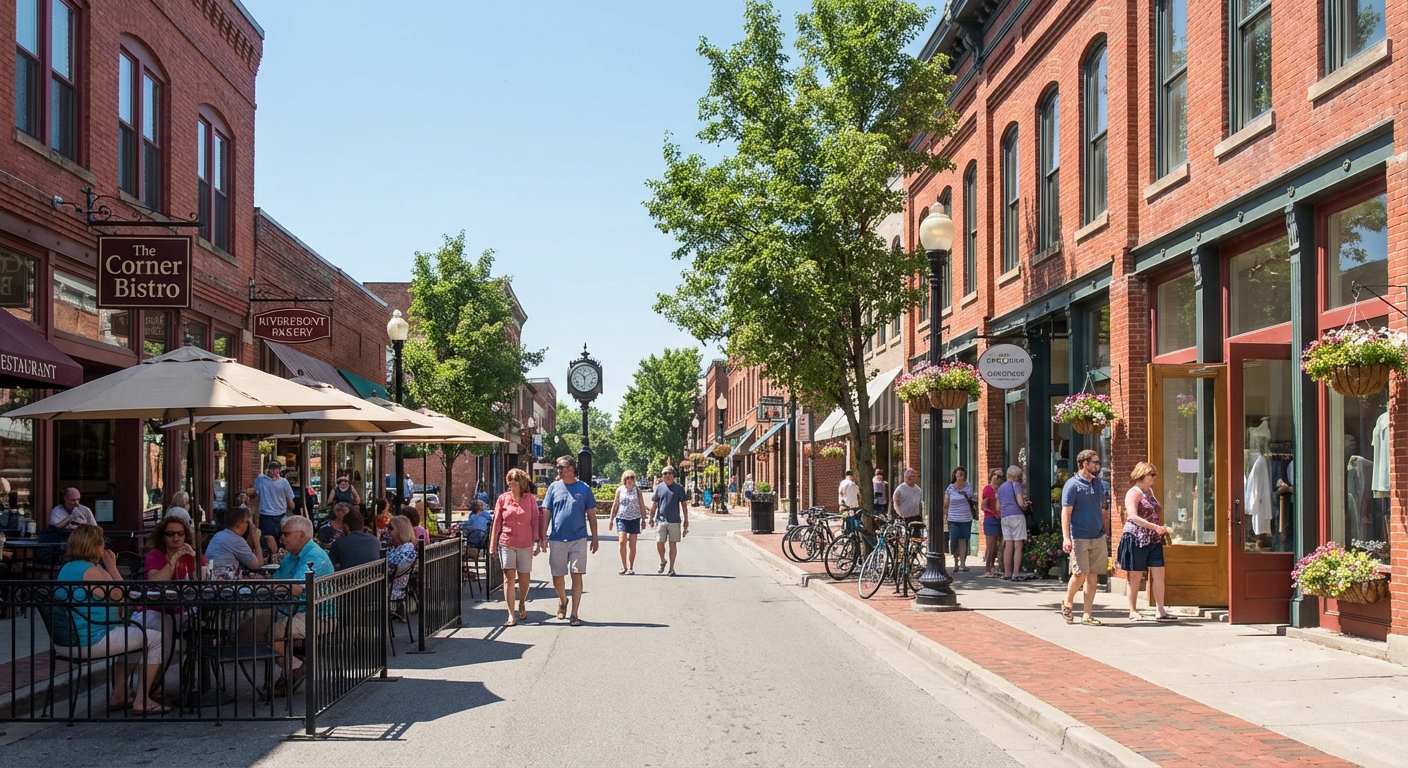
While the Willamette Falls Legacy Project represents the future, ongoing downtown revitalization and completed projects like The Cove demonstrate Oregon City’s proven track record of successful development.
The Downtown Oregon City Association, an accredited Main Street America program, has been instrumental in revitalizing the historic downtown core through focused efforts in economic vitality, design, promotion, and organization. Initiatives include facade improvement grants, public art installations like the “Mural on the Bluff,” and community events that draw both visitors and residents, contributing to low commercial vacancy rates.
According to the City’s economic development strategy, a vibrant downtown is a key driver for attracting residential development and skilled workers, with stated goals to “attract and retain businesses that contribute to downtown’s unique sense of place.” This isn’t abstract planning language—it’s a commitment that’s producing tangible results.
The Cove: A Case Study in Successful Urban Renewal
The Cove Project transformed a former brownfield site within the South End Urban Renewal Area into a thriving mixed-use development that perfectly illustrates Oregon City’s development vision. The project features:
- 204 modern apartments providing much-needed housing diversity that appeals to young professionals, families, and empty-nesters alike
- Retail space and public plaza creating community gathering places that foster the social connections residents crave
- Connection to the city’s trail system integrating recreation into daily life and making car-free transportation a genuine option
The Cove demonstrates Oregon City’s ability to leverage public-private partnerships to achieve development goals while enhancing public infrastructure. It’s proof that the city doesn’t just talk about balanced development—it delivers on those promises.
The South End Urban Renewal Plan outlines further goals for improving transportation connectivity and attracting private investment, signaling long-term commitment to strategic growth. For homebuyers, this sustained focus on coordinated development means your investment is supported by a coherent vision rather than haphazard construction.
New restaurants, craft breweries, and local shops have created a vibrant community atmosphere that appeals to diverse demographics from young professionals to families. Unlike bedroom communities where residents commute elsewhere for entertainment and dining, Oregon City is building the complete urban fabric that makes neighborhoods thrive.
Why Oregon City Offers the Best Real Estate Value in the Portland Metro Area
Oregon City’s real estate market combines accessibility, appreciation potential, and diversity of housing stock—creating a compelling entry point for homebuyers priced out of closer-in neighborhoods.
Oregon City offers more accessible homeownership compared to closer-in Portland neighborhoods or affluent suburbs like Lake Oswego, while still benefiting from the region’s overall economic strength. The market data tells a compelling story:
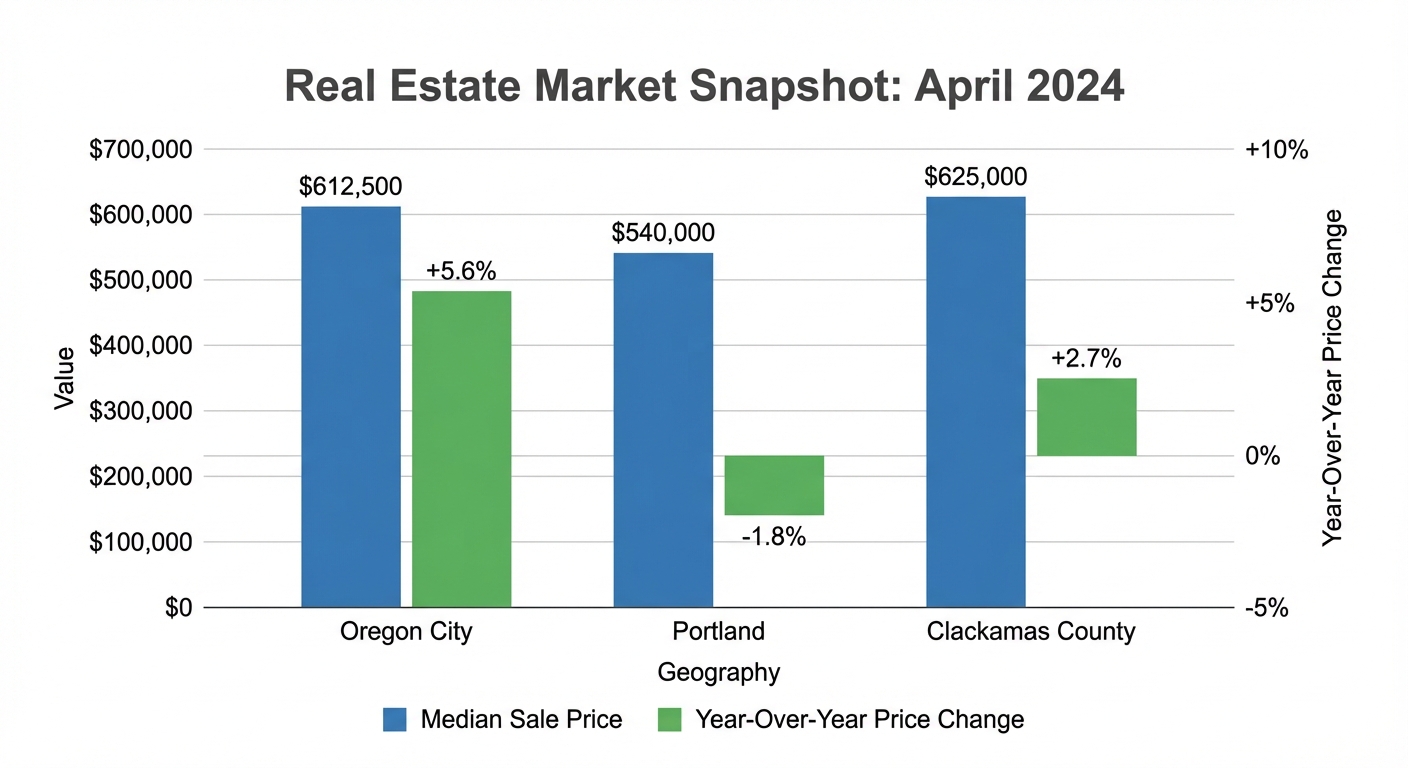
The comparison reveals Oregon City outperforming both Portland proper and broader Clackamas County. While Portland experienced a 1.8% decline in median sale price, Oregon City saw robust 5.6% year-over-year growth, demonstrating the market’s strength and resilience. Properties spend an average of 45 days on market, indicating healthy demand without the feeding-frenzy dynamics of overheated markets.
Housing stock diversity ranges from meticulously maintained historic homes in the McLoughlin neighborhood to modern construction in newly developed areas, catering to wide-ranging buyer preferences and budgets. Whether you’re seeking a Victorian-era home with original details or a contemporary new build with energy-efficient features, Oregon City delivers options.
Population growth projections signal sustained demand that will support property values for decades to come:
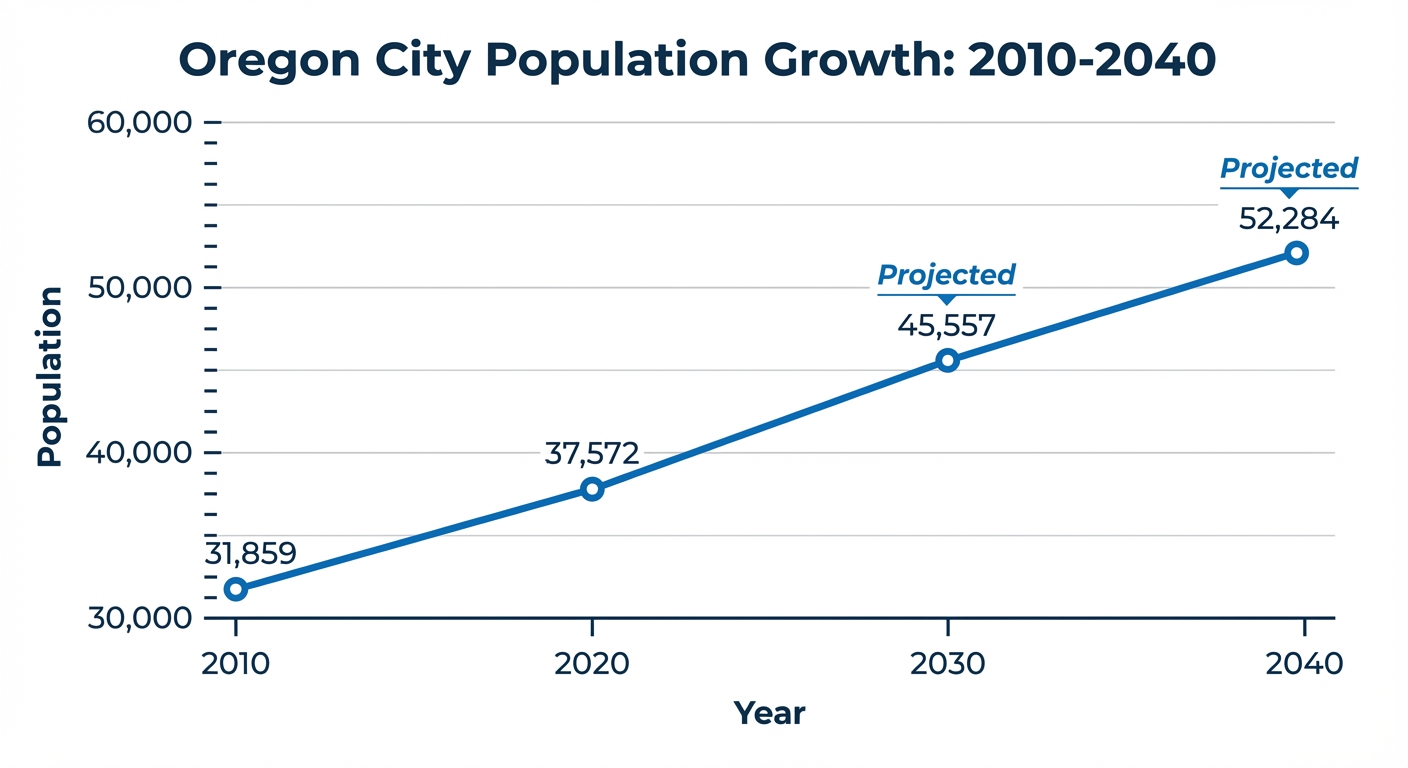
This steady trajectory from 37,572 residents in 2020 to a forecasted 52,284 by 2040 represents consistent, sustainable growth—not the boom-bust cycles that plague speculative markets.
Investment Perspective: The city’s median household income of $90,929 exceeds the Oregon statewide figure of $75,656, indicating economic stability and purchasing power among residents. This income advantage means Oregon City attracts buyers who can support a healthy real estate market over the long term.
With major revitalization projects in progress, Oregon City represents a market with significant upside potential—properties purchased now stand to benefit from multiple catalysts for appreciation. The combination of below-Portland pricing, above-Portland appreciation, and transformative public investment creates a compelling investment thesis for both owner-occupants and investors.
For buyers who’ve been priced out of Portland’s inner neighborhoods or who find Lake Oswego’s premium prices unjustifiable, Oregon City offers a genuine alternative rather than a compromise. You’re not settling for less—you’re discovering more.
The Lifestyle Advantages That Make Oregon City Home
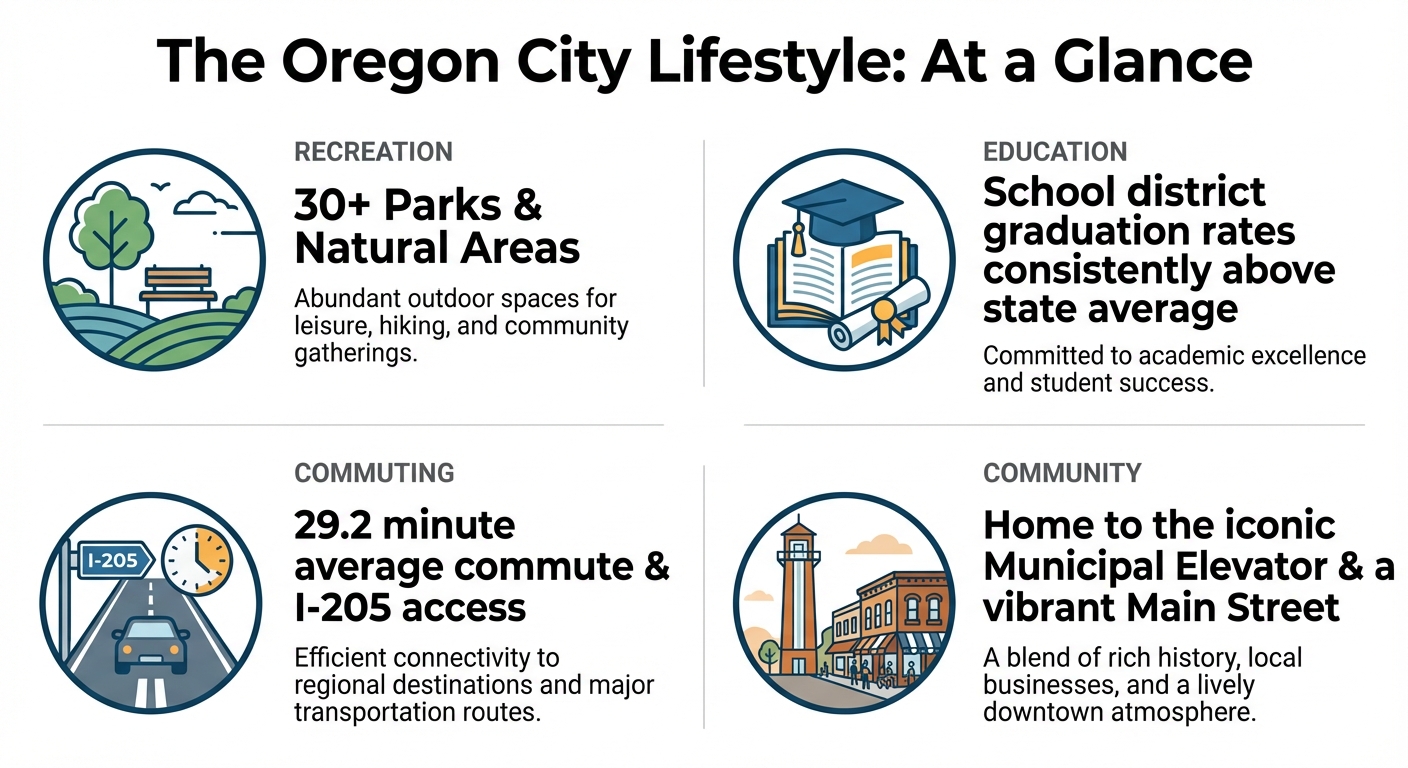
Real estate value extends beyond appreciation potential—Oregon City offers tangible quality-of-life benefits that appeal to families, outdoor enthusiasts, and anyone seeking a genuine sense of community.
Unparalleled Access to Nature and Recreation
The city’s location at the confluence of the Willamette and Clackamas rivers provides abundant opportunities for boating, kayaking, and fishing at destinations like Clackamette Park. Oregon City manages over 30 parks and natural areas with extensive trail systems for hiking and biking, including the Oregon City Arch Bridge and the historic Trolley Trail.
The iconic Municipal Elevator—one of only four outdoor municipal elevators worldwide—connects downtown with the upper bluff, providing both stunning views and a unique form of public transit. This isn’t just a tourist novelty; it’s a functional piece of infrastructure that residents use daily, offering a charming alternative to driving between elevation zones.
Education and Family-Friendly Infrastructure
Education quality attracts families: The Oregon City School District maintains graduation rates consistently above the state average, a critical factor for family homebuyers concerned about their children’s future. Healthcare infrastructure includes Providence Willamette Falls Medical Center, ensuring quality medical care without lengthy commutes—a consideration that becomes increasingly important as families age.
Authentic Community Culture
Community culture thrives through year-round farmers markets, numerous festivals, and locally-owned restaurants and craft breweries that foster authentic connections. The city’s official strategic plan emphasizes “placemaking” and fostering strong community identity as core objectives for future development—ensuring that growth doesn’t dilute the community character that makes Oregon City special.
Transportation Convenience Without Urban Chaos
Situated along Interstate 205, Oregon City offers straightforward access to the greater Portland area and PDX airport, with an average commute time of 29.2 minutes—comparable to other regional suburbs. Public transportation options via TriMet include multiple bus lines and proximity to WES Commuter Rail, which connects to MAX Light Rail, offering alternatives for Portland-bound commuters.
For remote workers and hybrid professionals, Oregon City provides the infrastructure and amenities of urban living with the character and pace of a smaller community. You can attend a Zoom meeting from your historic Craftsman home, then take an afternoon hike along the Willamette River—all without the stress of dense urban living.
Final Thoughts
Oregon City’s increasing popularity among homebuyers isn’t a trend—it’s a well-founded response to a community that has successfully balanced preservation with progress. The city offers something increasingly rare in today’s real estate market: authentic character, proven revitalization momentum, and genuine value.
For homebuyers, the value proposition is clear:
- Accessible pricing compared to Portland proper and premium suburbs
- Strong appreciation potential supported by transformative public investment
- Protected historic character that ensures long-term desirability
- Modern amenities and infrastructure that meet contemporary lifestyle expectations
- Quality education, healthcare, and recreation that support family life
The Willamette Falls Legacy Project alone represents a once-in-a-generation catalyst for growth, but it’s the totality of Oregon City’s vision—honoring history while building modern community infrastructure—that makes it such a compelling choice.
Whether you’re a first-time buyer seeking accessible entry into the Portland metro market, a family prioritizing schools and safety, or an investor looking for appreciation potential, Oregon City deserves serious consideration. This is a community that’s not just preserving its past—it’s actively building its future.
Ready to Explore Oregon City’s Real Estate Opportunities?
Discover available properties and receive expert guidance on this dynamic market from a trusted real estate professional serving the Portland metro area.
References:
- Oregon Secretary of State. (n.d.). Oregon History: Chronology
- Oregon Parks and Recreation Department. (2019). The Economic and Social Benefits of Historic Preservation in Oregon
- City of Oregon City. (n.d.). Historic Review Board
- PlaceEconomics. (2018). Twenty-Four Reasons Historic Preservation is Good for Your Community
- Willamette Falls Legacy Project. (n.d.). About the Project
- ECONorthwest. (2014). Willamette Falls Legacy Project: Analysis of Potential Economic Impacts
- Downtown Oregon City Association. (n.d.). About Us
- City of Oregon City. (2020). Oregon City Economic Development Strategic Plan
- City of Oregon City. (n.d.). The Cove at the Waterfront
- City of Oregon City. (2018). South End Urban Renewal Plan
- Portland State University Population Research Center. (2022). Population Forecasts for Clackamas County, its Cities, and Unincorporated Area 2022-2072
- U.S. Census Bureau. (2023). QuickFacts: Oregon City, Oregon
- City of Oregon City. (n.d.). Parks, Trails, and Natural Areas
- City of Oregon City. (n.d.). Oregon City Municipal Elevator
- National Park Service. (n.d.). National Register of Historic Places Database
- Willamette Falls Legacy Project. (n.d.). Riverwalk
- Regional Multiple Listing Service (RMLS). (2024, May). Market Action, April 2024
- Oregon Department of Education. (2023). Oregon Statewide Report Card 2022-2023
- TriMet. (n.d.). WES Commuter Rail