
Table of Contents
- From Rural Outpost to Suburban Powerhouse: Quantifying Happy Valley’s Growth
- Built for Today: The Appeal of Happy Valley’s New Construction and Housing Market
- Beyond the Home: Happy Valley’s Investment in Parks, Safety, and Daily Convenience
- Top-Tier Schools: How the North Clackamas School District Drives Happy Valley’s Appeal
- Managing Rapid Growth: How Happy Valley Is Planning for the Future
- Key Takeaways
Happy Valley, Oregon, has transformed from a quiet semi-rural community into one of the fastest-growing suburbs in the Portland metropolitan area. The numbers tell a remarkable story: since 2000, the city’s population has surged by over 470%, climbing from 4,519 residents to an estimated 26,085 by 2023. This isn’t just growth—it’s a demographic phenomenon that reflects Happy Valley’s emergence as a premier destination for families seeking modern amenities, exceptional schools, and a safe, welcoming community. What sets Happy Valley apart from other Portland suburbs? The city consistently ranks among Oregon’s safest communities, with violent crime rates more than 70% lower than the national average. The median year of home construction is 2001, meaning buyers find move-in-ready properties with contemporary features rather than fixer-uppers. And families benefit from the North Clackamas School District, which maintains an impressive 87.6% graduation rate—significantly above Oregon’s state average of 81.3%. This article explores the demographic drivers, housing market dynamics, community infrastructure, and educational excellence that explain Happy Valley’s appeal. Whether you’re relocating to the Portland metro area or seeking a family-friendly community with strong schools and modern amenities, understanding Happy Valley’s growth trajectory will help you make an informed decision about your next home.
From Rural Outpost to Suburban Powerhouse: Quantifying Happy Valley’s Growth
Happy Valley’s transformation is best understood through the data. The city’s population didn’t just grow—it exploded, more than quintupling between 2000 and 2023. This expansion reflects Metro’s Urban Growth Boundary (UGB) policy, which directs development to designated areas to prevent sprawl and preserve Oregon’s agricultural land and natural spaces.
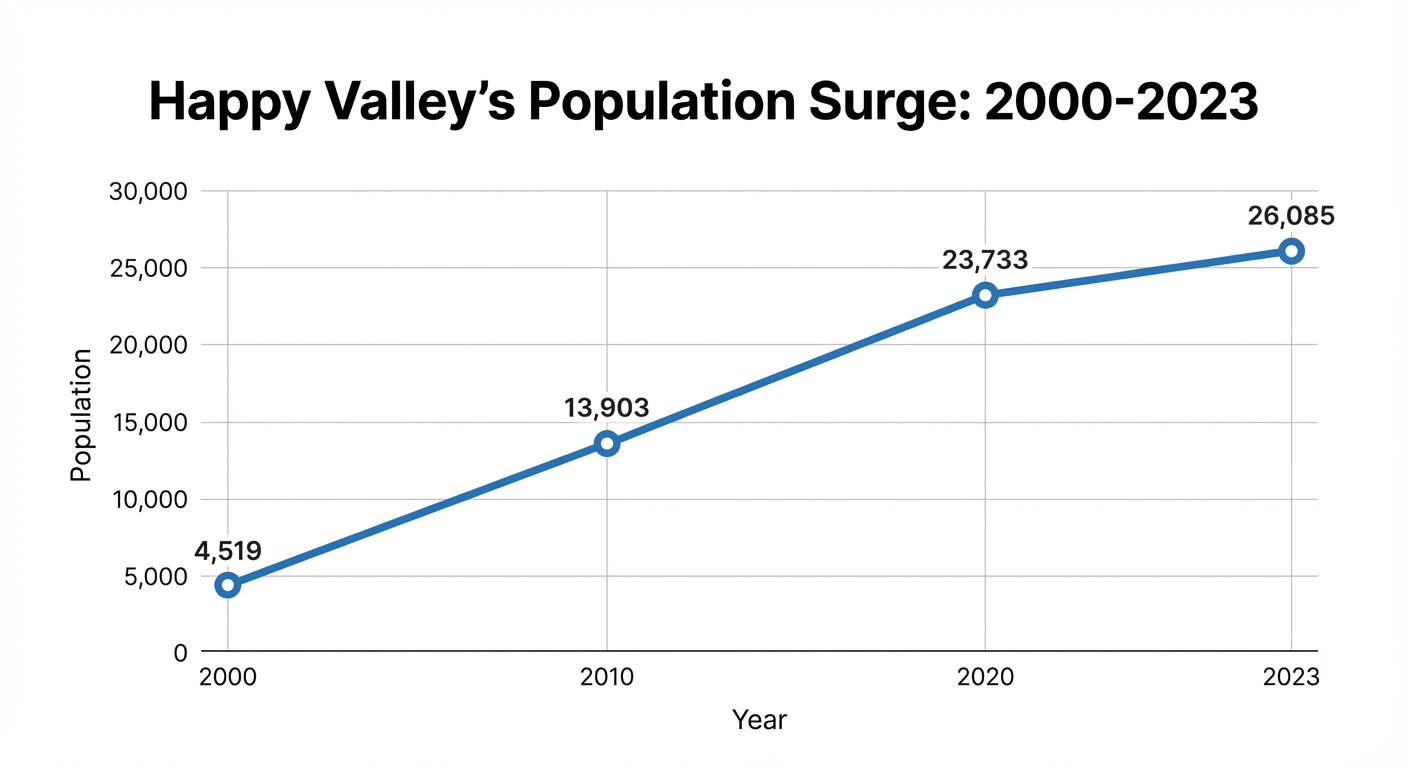
The growth pattern reveals three distinct phases: rapid expansion in the 2000s (207.7% increase), continued strong growth through the 2010s (70.7% increase), and steady development in recent years (9.9% increase from 2020 to 2023). This trajectory demonstrates sustained demand rather than a short-term boom, indicating that Happy Valley’s appeal has staying power.
Who’s Moving In? An Affluent, Educated Demographic
The people choosing Happy Valley aren’t random—they’re predominantly well-educated professionals with families. The demographic profile reveals a community with substantial economic resources and educational attainment:
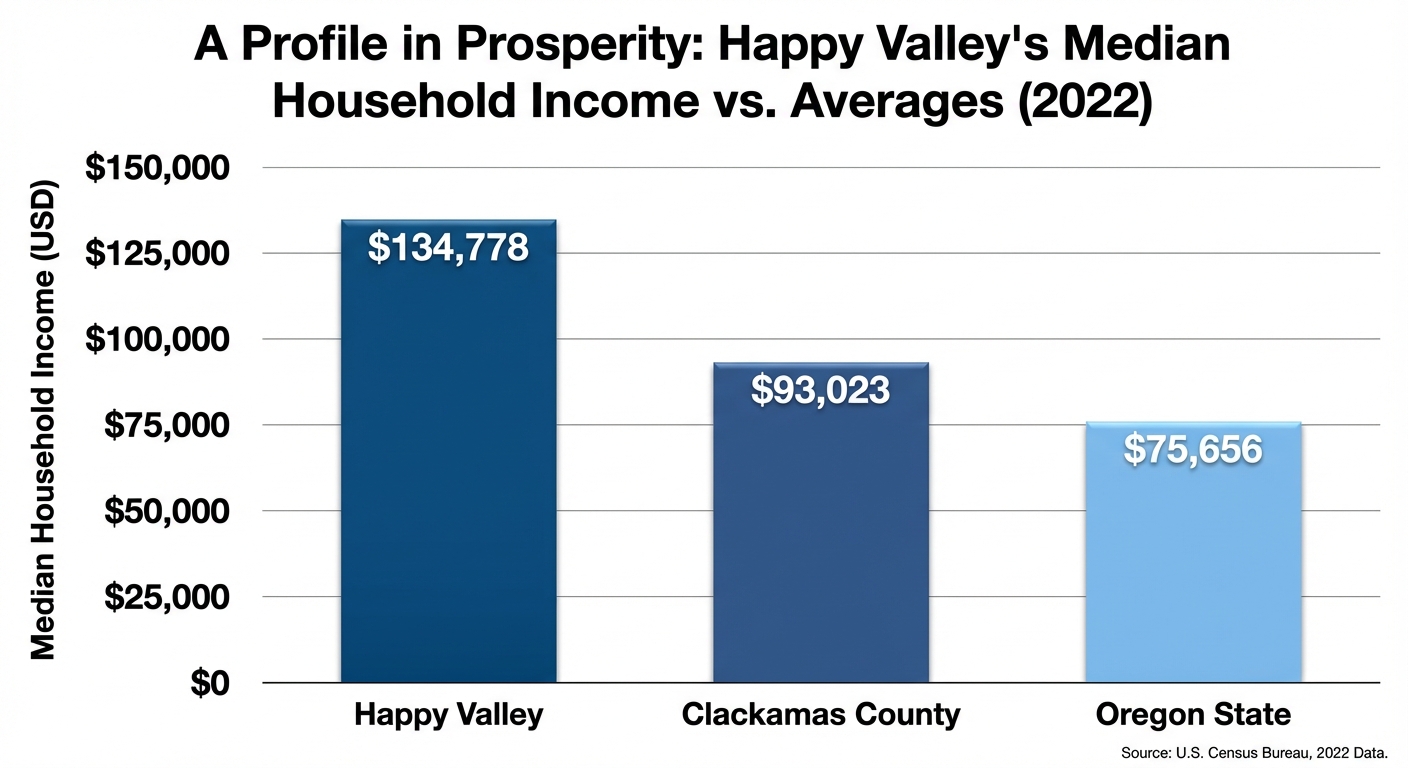
The median household income of $134,778 (as of 2022) significantly exceeds both Clackamas County ($93,023) and Oregon statewide ($75,656) figures. This 45% premium over the state average reflects the concentration of high-earning professionals who have made Happy Valley their home. Educational attainment follows a similar pattern. Approximately 54.4% of residents aged 25 and over hold bachelor’s degrees or higher, compared to 36.1% statewide. This educated population works primarily in healthcare, technology, and professional services sectors, with many commuting an average of 30.1 minutes to Portland’s downtown core or the “Silicon Forest” tech corridor on the west side.
Community Profile Snapshot: With a median age of 38.6 and 28.4% of residents under 18, Happy Valley is clearly a community where families thrive. This demographic composition creates a stable, prosperous neighborhood where residents share similar life stages and priorities—from supporting local schools to maintaining safe, well-kept properties.
For prospective buyers, this profile signals more than just statistics. It means neighbors who are likely to be long-term residents, active in schools and community organizations, and invested in maintaining property values and neighborhood quality. The high percentage of families makes it easier to integrate into a community-oriented lifestyle with built-in social networks through schools, sports leagues, and neighborhood events.
Built for Today: The Appeal of Happy Valley’s New Construction and Housing Market
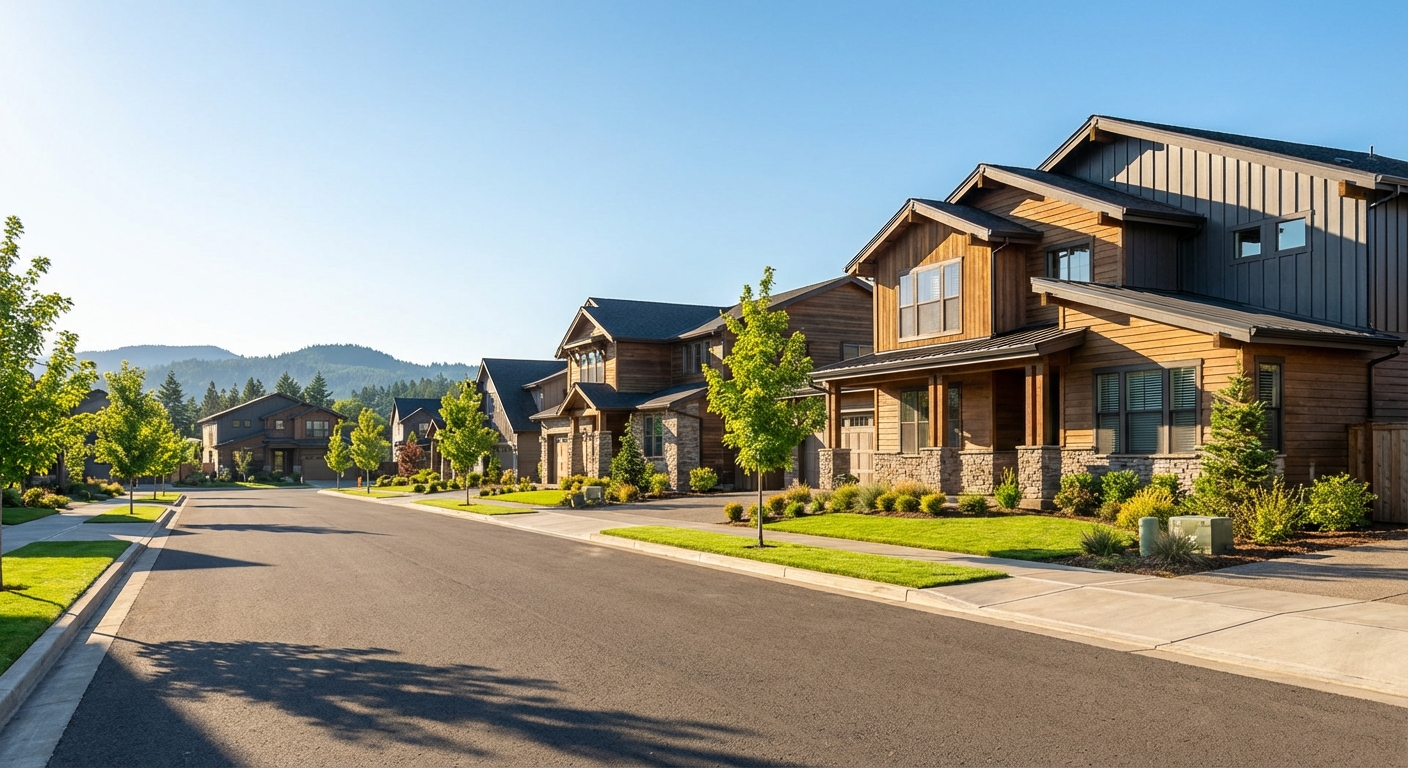
One of Happy Valley’s most distinctive features is its housing stock. Unlike established Portland suburbs where homes often date to the mid-20th century, Happy Valley’s median year of construction is 2001. This means buyers encounter contemporary homes with open floor plans, modern kitchens, energy-efficient systems, and updated finishes—without the need for extensive renovations that older properties often require.
New Construction Dominance
The city’s development pattern stems from strategic planning decisions made in the 1990s and early 2000s. Large tracts of land were designated for single-family residential development, enabling builders to create entire master-planned neighborhoods rather than piecemeal infill projects. This approach yielded several benefits:
- Modern amenities as standard: Homes feature contemporary electrical systems, efficient HVAC units, and building materials that meet current energy codes. Buyers avoid the surprise costs of upgrading outdated infrastructure.
- Consistent neighborhood design: Master-planned communities maintain architectural cohesion and include green spaces, sidewalks, and trail connections from the outset rather than as afterthoughts.
- Warranty protection: Newer homes typically come with builder warranties covering structural issues and major systems, providing financial protection during the crucial early years of homeownership.
Housing Market Trends
As of October 2023, the Regional Multiple Listing Service (RMLS) data showed that properties in Happy Valley’s 97086 zip code consistently commanded median sale prices above the greater Portland metro average. This premium reflects both the quality of housing and the comprehensive package of community benefits—schools, safety, parks—that come with a Happy Valley address. For buyers, this translates to higher upfront costs compared to older suburbs, but the investment offers tangible returns: lower maintenance expenses, reduced energy bills, and homes that retain value well because they won’t become functionally obsolete as quickly as older properties.
The Scouters Mountain Model
The development area surrounding Scouters Mountain Nature Park exemplifies Happy Valley’s thoughtful growth approach. City planning documents mandated that infrastructure—roads, utilities, stormwater management—be in place before residential construction began. This phased development model ensures that new neighborhoods integrate seamlessly with existing areas and maintain access to natural amenities. The result is a community where 100-acre Metro-managed parks sit adjacent to modern residential streets, where trail systems connect neighborhoods to nature preserves, and where commercial centers are strategically positioned to serve residents without overwhelming residential zones. This balance between development and preservation gives Happy Valley a distinctive character that appeals to buyers seeking suburban convenience without sacrificing access to outdoor recreation.
Beyond the Home: Happy Valley’s Investment in Parks, Safety, and Daily Convenience
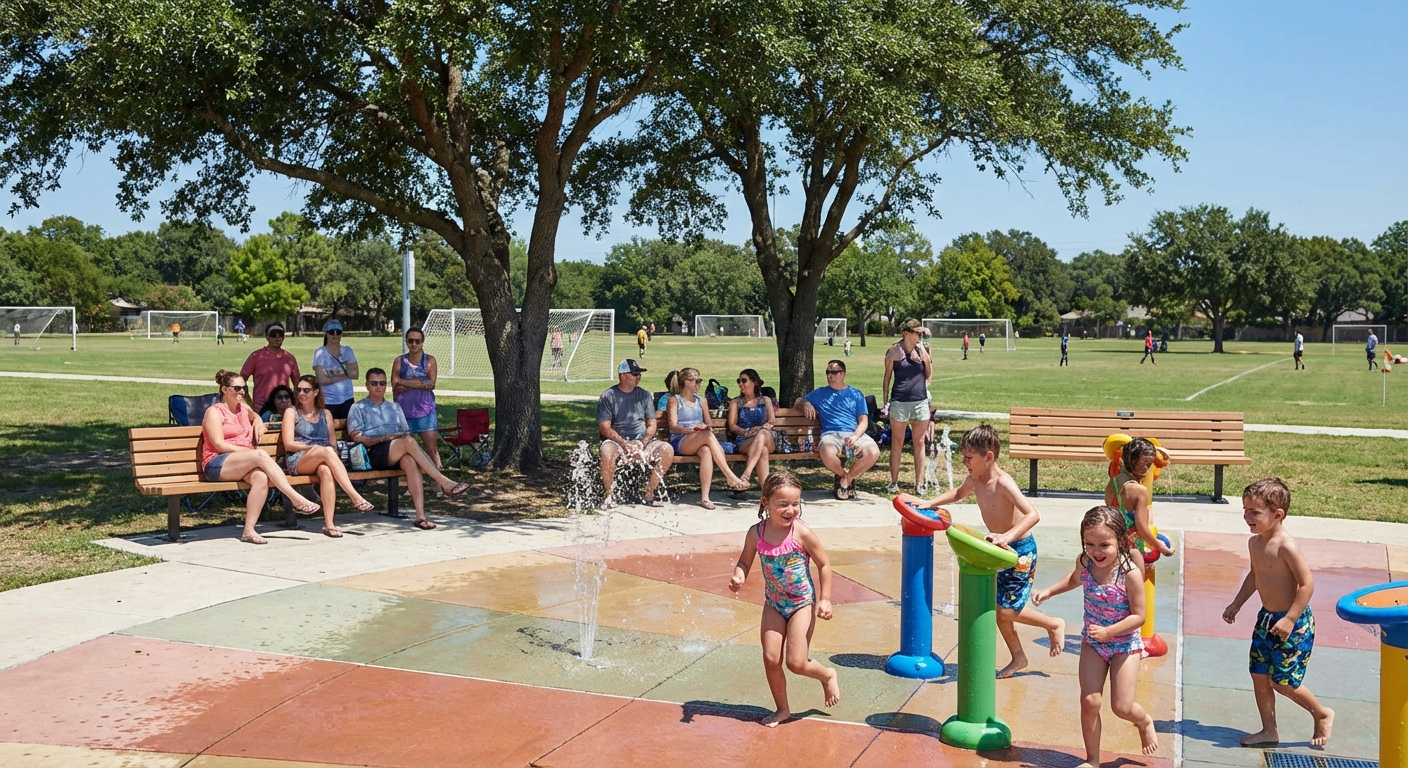
Happy Valley’s appeal extends far beyond individual properties. The city has systematically invested in parks, public safety, and commercial development to create a comprehensive quality-of-life package that rivals any Portland suburb.
A Robust Park and Trail System
The city manages over 20 parks and natural areas, supported by a comprehensive Parks and Recreation Master Plan that outlines continued expansion and connectivity improvements. These aren’t token green spaces but substantial facilities designed for diverse recreational activities:
- Happy Valley Park spans 54 acres and serves as the community’s recreational centerpiece. The park features a popular splash pad for summer cooling, an inclusive playground accessible to children of all abilities, regulation sports fields for youth leagues, and protected wetlands that provide environmental education opportunities.
- Mount Talbert Nature Park offers 4 miles of hiking trails through native oak savanna and Douglas fir forest. The trails wind to panoramic viewpoints where visitors can see Mount Hood, Mount St. Helens, and the Cascade Range. This Metro-managed park preserves critical habitat while providing year-round hiking and nature observation opportunities.
- Scouters Mountain Nature Park encompasses 100 acres with a nature play area where children can explore natural materials and terrain, plus trails that ascend to viewpoints offering stunning vistas of Mount Hood and the surrounding valleys.
- Hood View Park provides 45 acres dedicated to organized sports, with 12 multi-use fields serving soccer, lacrosse, and other youth sports programs. This facility demonstrates the city’s commitment to supporting active, healthy lifestyles for residents of all ages.
These parks create more than recreation opportunities—they form a connected network of green spaces that enhance property values, provide safe outdoor spaces for children, and foster the sense of community that families seek when choosing a suburban home.
Public Safety—One of Oregon’s Safest Cities
Happy Valley contracts with the Clackamas County Sheriff’s Office for police services, and the results speak for themselves. According to FBI Uniform Crime Reporting data, the city’s violent crime rate is more than 70% lower than the national average, consistently placing Happy Valley among Oregon’s safest communities of its size.
Safety Advantage: This safety record isn’t accidental. It reflects the combination of professional law enforcement, active community engagement, and the demographic stability that comes with a high percentage of homeowners invested in their neighborhoods. For families, this translates directly into peace of mind—children can ride bikes to friends’ houses, walk to neighborhood parks, and play in front yards without constant supervision.
The impact on property values is equally significant. Safe communities command premium prices because buyers will pay more for the security and quality of life that low crime rates provide. This safety premium reinforces Happy Valley’s position as a sought-after destination for families.
Commercial and Retail Growth
The development of Happy Valley Crossroads and other commercial centers has transformed daily life for residents. Rather than driving to Clackamas Town Center or Portland for shopping, dining, and services, residents now find many necessities within their own community. This mixed-use development strategy, outlined in the city’s economic development plans, creates a more self-sufficient, walkable community core. It reduces commute times for daily errands, supports local businesses, and provides employment opportunities close to home. For families juggling work, school, and activities, this convenience factor significantly enhances quality of life.
Top-Tier Schools: How the North Clackamas School District Drives Happy Valley’s Appeal
For families with school-age children, educational quality often determines where they buy a home. Happy Valley’s primary school district, the North Clackamas School District (NCSD), consistently ranks among Oregon’s best public school systems, providing a compelling reason for families to choose this community.
North Clackamas School District Performance
The numbers demonstrate NCSD’s educational excellence:
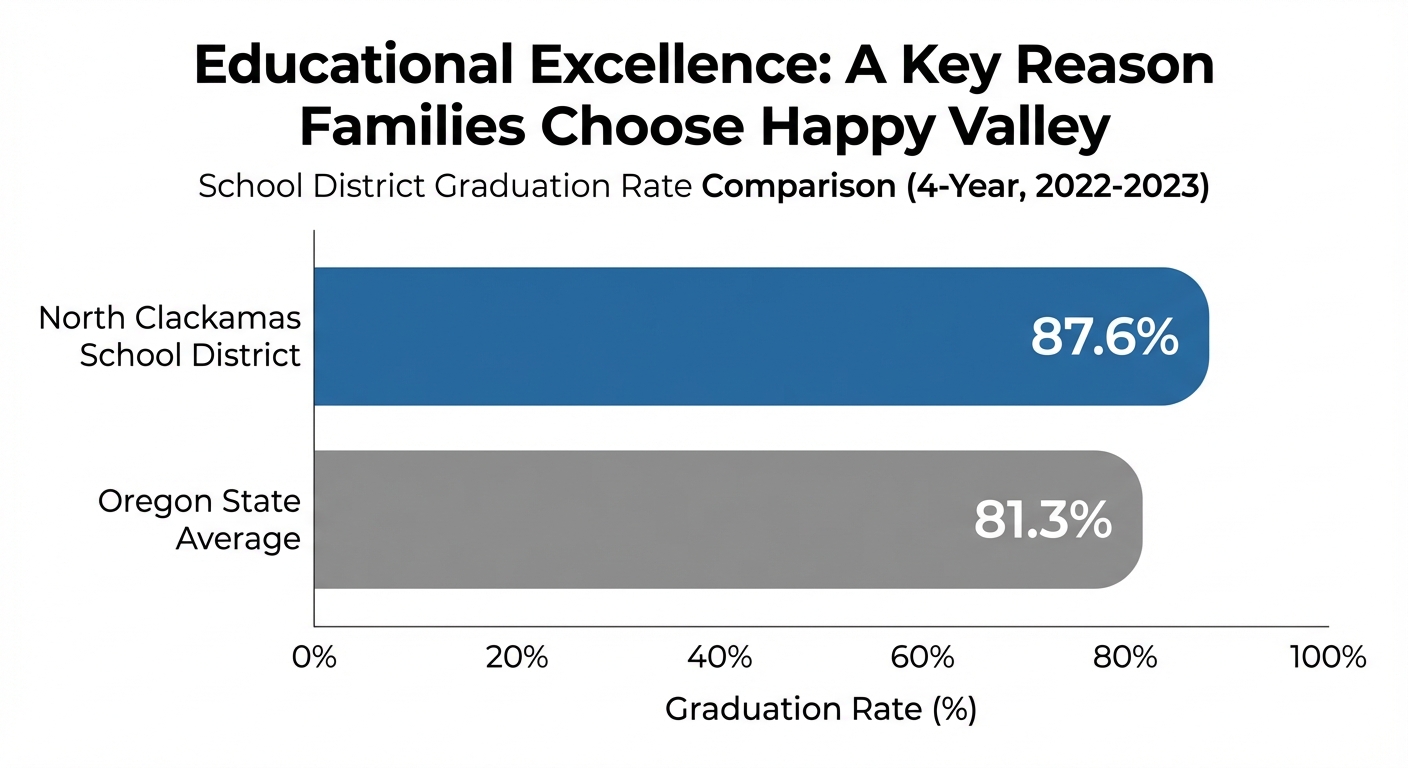
The district’s 87.6% four-year cohort graduation rate for 2022-2023 exceeds the state average of 81.3% by more than six percentage points. This gap might seem modest, but it represents hundreds of students who successfully complete high school and gain access to college and career opportunities they might otherwise miss. Individual schools serving Happy Valley reinforce this track record. Scouters Mountain Elementary and Happy Valley Middle School consistently receive high marks on state assessments, and parents frequently cite school quality as their primary reason for moving to the area. This creates a self-reinforcing cycle: strong schools attract families who value education, those families support schools through volunteerism and advocacy, and the resulting academic culture further elevates performance.
Academic Programs and Opportunities
NCSD offers more than just strong core academics. The district provides comprehensive Career & Technical Education (CTE) programs through the Sabin-Schellenberg Professional Technical Center, where students can pursue pathways in healthcare, engineering, manufacturing, and other skilled fields. This dual focus—preparing students for both four-year colleges and direct entry into skilled careers—reflects modern workforce realities. Not every student follows the traditional four-year university path, and CTE programs provide valuable alternatives that lead to well-paying careers without requiring bachelor’s degrees. For families, this flexibility means their children have multiple routes to success, regardless of their individual strengths and interests. Advanced Placement (AP) courses, honors programs, and enrichment opportunities round out the academic offerings, ensuring that high-achieving students remain challenged while students who need additional support receive appropriate interventions.
Infrastructure Investment: Adrienne C. Nelson High School
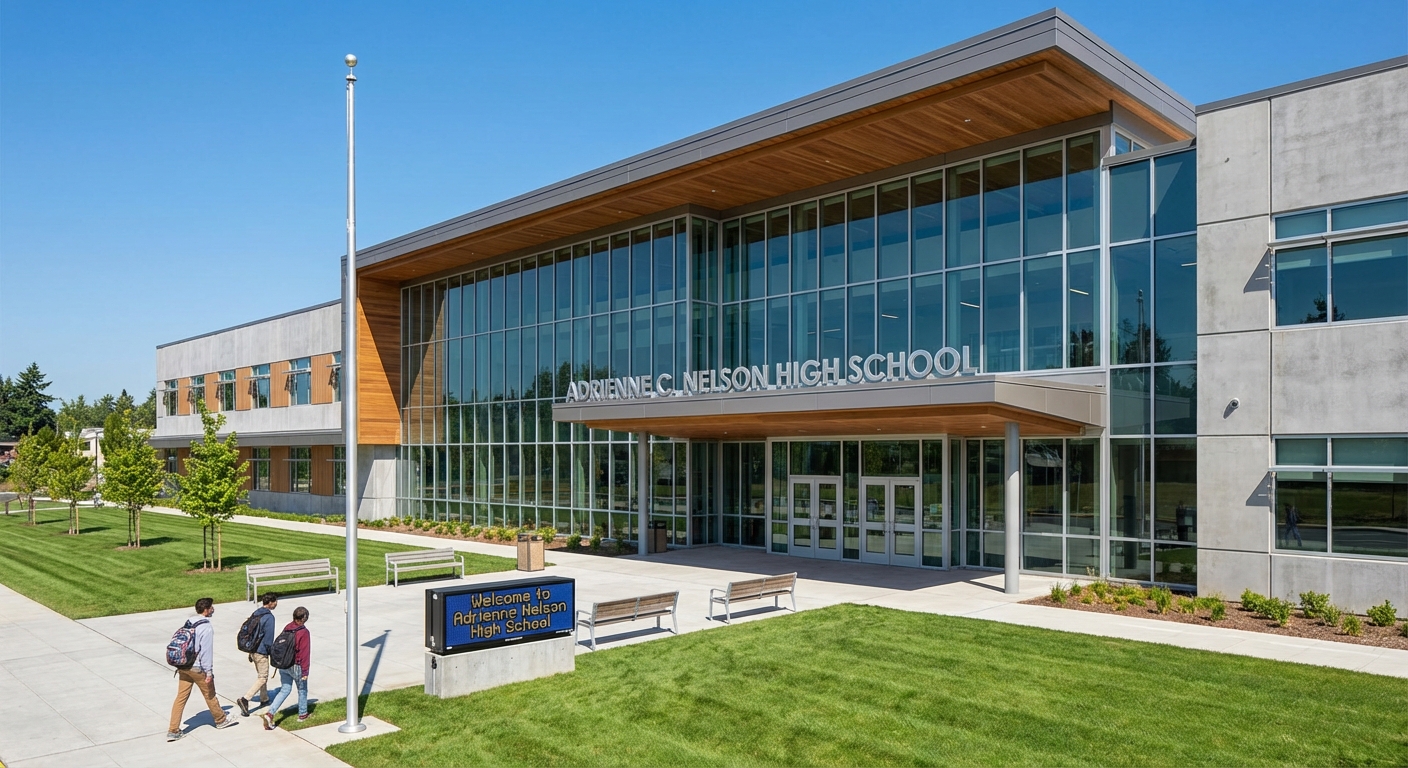
The opening of Adrienne C. Nelson High School in 2021 represents a watershed moment in managing Happy Valley’s growth. This state-of-the-art facility, funded by a community-supported bond measure, was designed specifically to alleviate overcrowding as the population expanded. The school features modern science labs, performance spaces for arts programs, updated athletic facilities, and flexible learning spaces that accommodate diverse teaching methods. More importantly, it demonstrates that both the community and the school district recognize growth challenges and proactively address them rather than allowing schools to become overcrowded and educational quality to decline.
Investment in Education: For prospective buyers, Nelson High School sends a clear message: this is a community that invests in its children’s future. The successful bond measure shows community willingness to fund education, and the district’s follow-through on construction demonstrates effective management.
Why This Matters for Buyers
Families researching communities often check school ratings before touring homes, and NCSD’s performance can be a decisive factor. The combination of high graduation rates, diverse programs, and modern facilities means parents can be confident their children will receive quality education that prepares them for future success. From an investment perspective, strong schools protect property values during market downturns and enhance appreciation during growth periods. Homes in highly-rated school districts consistently outperform similar properties in lower-rated districts, making Happy Valley not just a good place to raise a family but also a sound financial decision.
Managing Rapid Growth: How Happy Valley Is Planning for the Future
Rapid population growth presents inevitable challenges—increased traffic, strain on infrastructure, and the need for expanded services. Happy Valley’s city government has taken a proactive approach to these issues through comprehensive long-term planning and fiscal responsibility.
Historical Context and Strategic Growth
Incorporated in 1965, Happy Valley remained relatively small for decades, with significant growth beginning in the late 1990s. This timing means most of the city’s infrastructure is relatively new, designed for current needs rather than retrofitted from systems built for a much smaller population. The city’s position within Metro’s Urban Growth Boundary has been both opportunity and challenge. The UGB designation directed development to Happy Valley, enabling rapid growth, but it also required the city to plan carefully to accommodate that growth without overwhelming infrastructure or destroying the qualities that made the area attractive in the first place.
Transportation System Plan
The city’s 20-year Transportation System Plan (TSP) identifies key corridors requiring widening, intersection upgrades, and expanded bicycle and pedestrian networks to manage increasing traffic volumes. The plan takes a multimodal approach, recognizing that not all trips require cars and that well-designed bike and pedestrian infrastructure can reduce vehicle traffic while improving quality of life. Major projects include improvements to 172nd Avenue, a critical north-south arterial that connects Happy Valley to other parts of Clackamas County and provides access to employment centers. These improvements will widen lanes, enhance intersections, and add pedestrian crossing facilities to make the corridor safer and more efficient.
Capital Improvement Plan
The city’s 2023-2028 Capital Improvement Plan (CIP) provides specific, funded projects that demonstrate commitment to infrastructure maintenance and expansion. Key investments include:
- 172nd Avenue Improvement Project: Comprehensive upgrades to this major corridor, including road widening, traffic signal enhancements, and pedestrian facilities.
- Street Surface Maintenance Programs: Ongoing resurfacing and repair work to preserve road quality and extend infrastructure lifespan. These programs prevent the deterioration that plagues many older suburbs where deferred maintenance creates massive repair backlogs.
- Parks and Recreation Expansion: Continued investment in new parks and trail connections, ensuring that as the population grows, residents maintain access to quality recreational spaces.
The CIP’s multi-year scope provides transparency and accountability, allowing residents to see exactly how their tax dollars are being invested and track progress on promised projects.
Fiscal Responsibility
Perhaps the strongest indicator of Happy Valley’s management capabilities is its ‘AA+’ bond rating from S&P Global Ratings. This high rating reflects sound financial management, a healthy and diverse economic base, and responsible debt levels. The practical impact is significant: when the city needs to fund infrastructure projects through bond issues, the high rating enables borrowing at lower interest rates, saving taxpayers money while ensuring critical projects move forward. This fiscal stability means the city isn’t one budget crisis away from cutting services or deferring maintenance. Police patrols will continue, parks will be maintained, roads will be repaired, and schools will be supported—the fundamental services that protect property values and quality of life remain secure even during economic downturns.
What This Means for Residents
Proactive planning reduces the likelihood of infrastructure bottlenecks that can rapidly degrade quality of life in fast-growing areas. Few things frustrate residents more than chronic traffic congestion, deteriorating roads, overcrowded schools, and underfunded parks—the typical symptoms of growth that outpaces planning. Happy Valley’s comprehensive approach demonstrates that city leadership understands these risks and has developed specific, funded strategies to address them. For prospective residents, this means the community they’re buying into today is likely to remain attractive and functional as it continues to grow, rather than becoming a victim of its own success.
Key Takeaways
Happy Valley offers a compelling combination of factors that explain its rapid growth and sustained popularity among families. Modern housing stock means buyers find move-in-ready properties with contemporary features rather than renovation projects. Top-tier schools through the North Clackamas School District provide excellent education and protect property values. An extensive park system, low crime rates, and growing commercial development create a comprehensive quality-of-life package that rivals any Portland suburb. The city’s proactive planning and strong fiscal health demonstrate a commitment to managing growth thoughtfully. The Transportation System Plan, Capital Improvement Plan, and ‘AA+’ bond rating show that infrastructure is keeping pace with population increases, mitigating the traffic and service degradation that often plague fast-growing communities. Of course, rapid growth involves trade-offs. Home prices remain higher than many other Portland suburbs, reflecting demand for Happy Valley’s unique combination of attributes. Traffic volumes continue increasing despite infrastructure improvements, and the commute to Portland employment centers averages just over 30 minutes. Some buyers may prefer the established character of older suburbs or the lower price points available in communities farther from the urban core. But for families seeking a move-in-ready home in a safe, well-planned community with access to nature, excellent schools, and modern amenities, Happy Valley stands out. The city’s transformation from rural outpost to thriving suburb demonstrates what happens when rapid growth meets thoughtful planning—a community that successfully balances development with livability, creating a place where families can thrive for years to come. As one of Oregon’s fastest-growing suburbs, Happy Valley is writing a new chapter in suburban living—one that balances modern amenities with thoughtful planning, family-oriented services with fiscal responsibility, and rapid development with environmental preservation. For prospective residents, the question isn’t whether the city will continue to grow, but whether its unique blend of qualities aligns with your priorities and your family’s needs.
Ready to Make Happy Valley Your Home?
If you’re considering making Happy Valley your home, GW Hartley IV can help you navigate the local real estate market, understand neighborhood nuances, and find the right property for your family.
References:
- United States Census Bureau. (2020). QuickFacts: Happy Valley city, Oregon.
- Portland State University Population Research Center. (2023). July 1, 2023 Population Estimates for Oregon and Its Counties and Incorporated Cities.
- Metro. (n.d.). Urban growth boundary.
- United States Census Bureau. (2022). American Community Survey 5-Year Estimates: Happy Valley city, Oregon.
- City of Happy Valley. (2022). Happy Valley Comprehensive Plan.
- RMLS. (2023). Market Action, October 2023.
- Metro. (n.d.). Scouters Mountain Nature Park.
- City of Happy Valley. (2019). Parks and Recreation Master Plan.
- City of Happy Valley. (n.d.). Economic Development.
- Oregon Department of Education. (2024). Oregon Statewide Report Card 2022-23.
- North Clackamas School District. (n.d.). Sabin-Schellenberg Professional Technical Center.
- North Clackamas School District. (2021). Nelson High School Opens.
- City of Happy Valley. (2019). Transportation System Plan.
- City of Happy Valley. (2023). City of Happy Valley Awarded ‘AA+’ Bond Rating.
- City of Happy Valley. (2021). Happy Valley Housing Needs Analysis.
- Metro. (n.d.). Mount Talbert Nature Park.
- North Clackamas Parks and Recreation District. (n.d.). Hood View Park.
- Federal Bureau of Investigation. (2022). Crime Data Explorer.
- Oregon Department of Education. (2023). At-A-Glance School & District Profiles.
- City of Happy Valley. (2023). Adopted Capital Improvement Plan FY 2023-24 to 2027-28.